
You’re legally drunk at 0.08% BAC in most U.S. states, that’s 0.08 grams of ethanol per 100 milliliters of blood. At this threshold, your coordination, judgment, and reaction time are measurably compromised. However, impairment actually begins much earlier, around 0.05% BAC, where steering and object tracking already deteriorate. Factors like your body weight, gender, and food intake all shift where that line falls for you personally, and the full picture is more precise than most people expect. You’re legally drunk at 0.08% BAC in most U.S. states, that’s 0.08 grams of ethanol per 100 milliliters of blood. Discussions around what was the legal blood alcohol level in 1980 highlight how these thresholds have evolved over time, but even today, coordination, judgment, and reaction time are measurably compromised at 0.08%, with impairment beginning much earlier around 0.05% BAC depending on individual factors like body weight, sex, and food intake.
What Does BAC Actually Mean?

Blood alcohol concentration, or BAC, measures the amount of ethanol circulating in your bloodstream, expressed as a percentage of alcohol per unit of blood. It’s also called blood alcohol content, and both terms refer to the same metric used to quantify alcohol impairment levels in legal and medical contexts. Blood alcohol concentration, or BAC, measures the amount of ethanol circulating in your bloodstream, expressed as a percentage of alcohol per unit of blood. Often visualized through a blood alcohol level chart, it’s also called blood alcohol content, and both terms refer to the same metric used to quantify alcohol impairment levels in legal and medical contexts.
In the United States, BAC appears as a percentage, so 0.08% means 0.08 grams of alcohol per 100 milliliters of blood. Other jurisdictions express it in grams per liter or milligrams per deciliter, but the underlying measurement is identical. For reference, 1 g/L equals approximately 21.7 mmol/L when concentrations are expressed in molar units.
Your BAC rises when you consume alcohol faster than your liver can process it. Using standard drink measurement as a reference point, your liver metabolizes roughly one standard drink per hour, keeping BAC manageable under moderate consumption.
At What BAC Level Are You Legally Drunk?
In the United States, you’re legally drunk under per se laws when your BAC reaches 0.08%, a standard adopted nationwide following a 1998 federal initiative and enforced as a criminal offense in most states. If you’re a commercial driver, pilot, or under 21, you face considerably stricter thresholds, 0.04%, 0.04%, and near-zero tolerance respectively, meaning you can face arrest well below the standard limit. Many states also impose enhanced penalties once your BAC crosses higher thresholds like 0.15% or 0.20%, with Utah standing apart by enforcing a stricter 0.05% limit that has demonstrably reduced fatal crash rates. Research confirms that 0.08% BAC laws have reduced alcohol-related motor vehicle deaths by a median of 7 percent, underscoring why these thresholds carry serious legal and public health weight.
Standard Legal BAC Limits
Legal BAC thresholds vary across jurisdictions, but three benchmark levels, 0.03%, 0.05%, and 0.08%, define the majority of drunk-driving laws worldwide. The BAC 0.08 legal limit governs most U.S. states and Canada, where alcohol impairment and road safety research shaped legislation around measurable cognitive and motor degradation. Meanwhile, the BAC 0.05 reduced coordination threshold drives policy across Europe, Australia, New Zealand, and much of South America, reflecting stricter public safety standards. Japan enforces 0.03%, while China applies penalties beginning at 0.02%. Some jurisdictions, Czech Republic, Romania, and Italy for novice drivers, impose a 0.0% legal intoxication limit, eliminating any permissible alcohol presence. Countries such as Afghanistan, Mauritania, Somalia, Sudan, and Yemen enforce total bans on alcohol consumption entirely, making drunk driving laws irrelevant within a broader prohibition framework. Understanding where your location falls within these frameworks directly determines your legal exposure behind the wheel.
Zero Tolerance BAC Rules
Zero tolerance BAC rules function as a separate legal framework targeting drivers under 21, setting enforceable thresholds at or near 0.00% rather than the standard adult limit of 0.08%. All 50 states enforce zero tolerance policies, with most states triggering DUI charges at BAC 0.02 or lower. If you’re under the legal drinking age, any detectable alcohol while driving exposes you to arrest, automatic license suspension, and conviction. States like Virginia and South Carolina enforce the 0.02% threshold explicitly, while North Carolina arrests underage drivers slightly above 0.00%. These laws directly target impaired driving before significant intoxication develops, recognizing that even minimal alcohol affects judgment in young drivers. The contrast with the adult 0.08% standard reflects stricter regulatory intent toward underage alcohol consumption.
Enhanced Penalty BAC Thresholds
Once you cross the standard 0.08% BAC threshold, many states don’t simply apply a flat penalty, they escalate consequences through enhanced penalty tiers that kick in at higher BAC levels. These tiers reflect how blood alcohol concentration compounds impairment beyond the bac 0.08 legally drunk level, often correlating with consuming additional grams of ethanol per drink faster than your liver can metabolize.
Enhanced penalty thresholds vary considerably by state:
| State | Enhanced Penalty BAC Threshold |
|---|---|
| New Jersey | 0.10% |
| Kentucky | 0.18% |
| Illinois | 0.16% |
| Texas | 0.15% |
| Tennessee | 0.20% |
23 states trigger enhanced penalties at 0.15% BAC. These thresholds result in longer license suspensions, steeper fines, and mandatory treatment programs, reflecting measurably greater neurological impairment at elevated blood alcohol concentration levels.
How Does Weight and Gender Affect Your BAC?
Your body weight directly shapes your BAC because a larger volume of blood and water dilutes alcohol more effectively, reducing peak concentration. Gender compounds this effect through differences in body composition, enzyme activity, and hormonal factors, a 125 lb woman reaches 0.06 BAC after two drinks in two hours, while a 180 lb man reaches only 0.03 BAC under identical conditions. Women also produce roughly 50% less gastric alcohol dehydrogenase, meaning more alcohol bypasses stomach metabolism and enters the bloodstream, typically yielding about 7% higher BAC than a man of equal weight.
Weight Influences BAC Levels
| Body Type | BAC Outcome |
|---|---|
| Higher weight, lean | Lower BAC |
| Lower weight, higher fat | Higher BAC |
| Same weight, more muscle | Reduced BAC |
The BAC inverse weight relationship confirms this: comparative weight examples consistently show smaller individuals reach impairment thresholds faster from identical alcohol volumes.
Gender Affects Alcohol Processing
Beyond body weight, biological sex substantially shapes how your body processes alcohol. Body composition differences mean women carry less body water (45, 50%) than men (55, 65%), concentrating alcohol in a smaller fluid volume. Gastric enzyme activity differs enormously: women produce roughly 50% less gastric alcohol dehydrogenase, reducing first-pass metabolism and raising BAC approximately 7% above men consuming equivalent amounts. Alcohol elimination rates actually favor women, who demonstrate faster linear-phase BAC decline in most studied populations. Hormonal influences further complicate this picture:
- Premenstrual hormonal shifts heighten alcohol sensitivity
- Oral contraceptives elevate alcohol’s physiological impact comparably
- Peak BAC acceleration may activate microsomal ethanol oxidizing system pathways
These combined factors consistently produce higher peak BACs in women than men drinking identical amounts over identical timeframes.
How Many Drinks Does It Take to Reach 0.08% BAC?
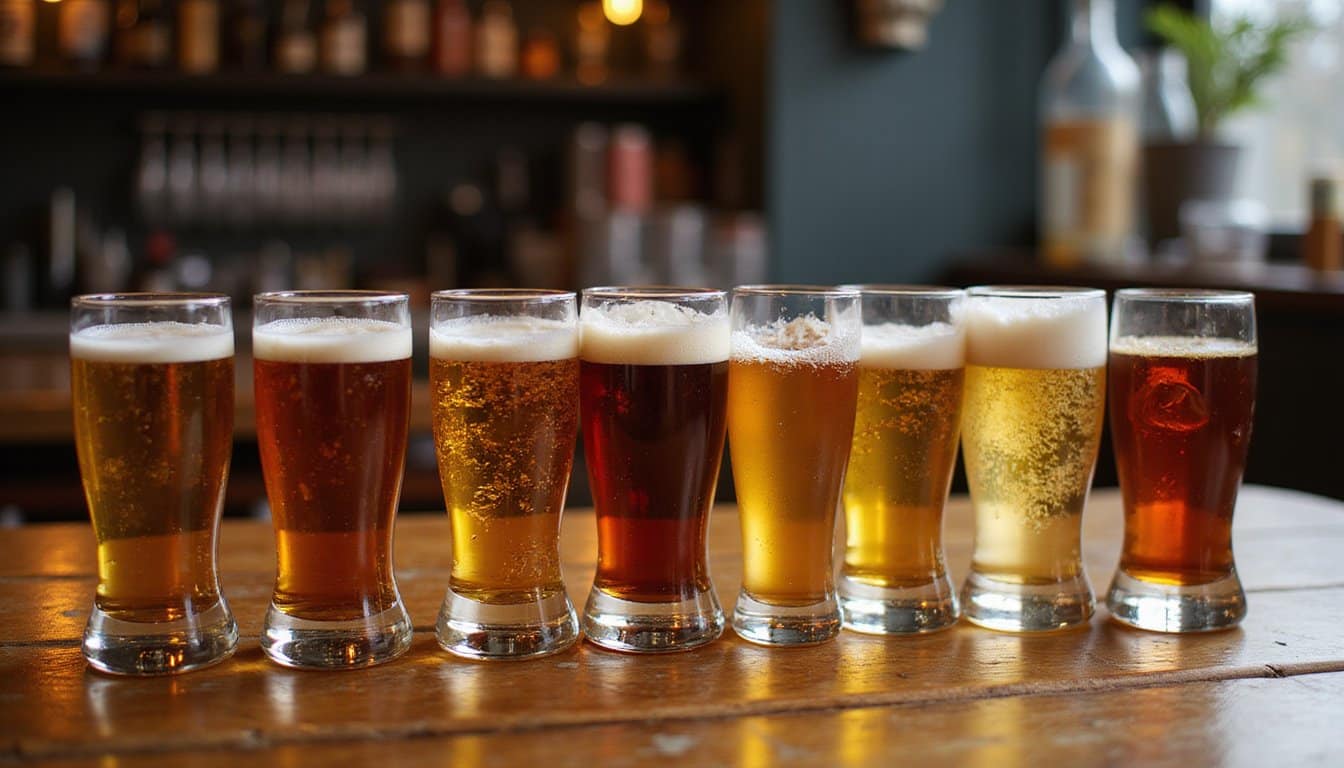
Several factors determine how many standard drinks it takes to reach 0.08% BAC, but general estimates exist based on body weight and biological sex. For an average-sized man, consuming four to five standard drinks over two hours typically raises blood alcohol concentration to 0.08%. For an average-sized woman, three to four drinks over the same period achieves that threshold. A 130-pound woman can reach a peak near 0.077 BAC after just two drinks, while a 180-pound man requires approximately four drinks within one hour. Your alcohol absorption rate and alcohol metabolism both influence these outcomes considerably. Food intake slows absorption, reducing peak BAC, while faster consumption accelerates it. These figures are estimates only, breathalyzers provide the only reliable, personalized BAC measurement. Several factors determine how many standard drinks it takes to reach 0.08% BAC, but general estimates exist based on body weight and biological sex. A blood alcohol concentration level calculator can help approximate these ranges, showing that an average-sized man may reach 0.08% after four to five drinks over two hours, while an average-sized woman may reach it with three to four. Individual differences in alcohol absorption, metabolism, and food intake significantly influence these outcomes, so such estimates remain approximate compared to actual breathalyzer measurements.
When Does Alcohol Start Impairing Your Driving?
Your driving ability starts deteriorating well before you reach the 0.08% legal limit. At just 0.05% BAC, your coordination declines, object tracking becomes difficult, and your steering is already compromised. By 0.07% BAC, your lane positioning measurably worsens, yet you’re likely unaware your performance has dropped at all.
Impairment Begins Early
Although the legal driving limit in most U.S. states sits at 0.08 g/dL BAC, impairment begins well before you reach that threshold. The physiological effects of ethanol activate at measurably low concentrations, producing alcohol related behavioral changes that compromise driving performance.
Research confirms impairment begins early across three critical performance markers:
- Coordination deteriorates starting at 0.01 g/dL BAC
- Judgment and reaction time decline measurably at 0.03 g/dL
- Critical driving tasks show significant impairment at 0.05 g/dL
Alcohol metabolism variability means one drink can functionally impair some drivers while affecting others less severely. Your body weight, sex, and liver enzyme activity all influence how quickly BAC rises. Zero-tolerance policies for drivers under 21, set at 0.01 g/dL, formally recognize that early impairment carries real crash risk.
Legal Limits Versus Reality
Knowing impairment begins at 0.01 g/dL raises an uncomfortable question: why does the law wait until 0.08% to intervene? The answer is political, not physiological. Blood alcohol concentration data clearly show measurable cognitive decline well before 0.08%. Most industrialized nations recognize this gap, 91 countries enforce 0.05% limits or lower. Utah’s 2018 reduction to 0.05% produced a 20% drop in fatal crashes, and British Columbia’s stricter range cut fatalities by 40%. Alcohol intoxication stages progress continuously, meaning legal thresholds don’t define safe driving. Alcohol overdose risk also escalates when drivers misjudge their own impairment, believing legality equals safety. Responsible alcohol consumption awareness demands you understand that staying below 0.08% doesn’t mean you’re unimpaired, it means you haven’t crossed an arbitrary legal boundary.
BAC Limits for Commercial and Underage Drivers
While the standard legal BAC limit for non-commercial drivers sits at 0.08%, commercial drivers and underage drivers face markedly stricter thresholds. The commercial drivers BAC limit is set at 0.04% by the FMCSA, applying to any commercial vehicle operator regardless of CDL status. Zero-tolerance laws govern underage drivers BAC limits, with most states enforcing 0.02% or lower.
Key distinctions you should understand:
- The 0.04% commercial vehicle limit applies based on vehicle type, not license class.
- CDL holders driving personal vehicles remain subject to the standard 0.08% threshold.
- Underage drivers BAC limits apply to all motor vehicle operation without exception.
These stricter standards reflect the elevated responsibility and crash severity associated with commercial vehicles and the developmental vulnerabilities of drivers under 21.
Which States Have the Harshest Penalties for High BAC?
State laws don’t stop at the 0.08% legal limit, many jurisdictions layer additional penalties onto drivers who exceed elevated BAC thresholds, creating a tiered enforcement structure. If your blood alcohol concentration reaches 0.15%, you’ll face severe intoxication penalties in 27 states, including California, Texas, and Colorado, where stricter fines, mandatory jail time, and reduced judicial discretion apply. Alcohol-related legal regulations intensify further in Wisconsin, which enforces penalties at 0.17%, 0.20%, and 0.25% BAC. Washington D.C., Florida, and Indiana trigger enhanced sanctions at 0.20%. California’s proposed “Severe DUI” classification targets 0.16% BAC offenders with alcohol purchase restrictions and potential felony charges for repeat violations. Alcohol-related accident risk compounds these penalties extensively, injury crashes at extreme BAC levels add prison sentences across virtually all listed states.
Does a 0.05% BAC Limit Actually Reduce Fatal Crashes?
Evidence from international jurisdictions shows that lowering the legal BAC limit to 0.05% does reduce fatal crashes, and the data’s compelling. Blood alcohol concentration research confirms measurable improvements when stricter thresholds are enforced across diverse traffic systems.
Key outcomes from 0.05% alcohol and driving safety policies include:
- 5, 10% decrease in alcohol-related fatal and injury crashes internationally
- Queensland recorded 18% fewer fatal collisions and 14% fewer serious ones
- Utah saw an 11.5% crash reduction per mile and a 19.8% fatality drop
These results support public health alcohol education efforts promoting lower legal limits. As an alcohol harm reduction strategy, 0.05% laws don’t increase arrests or suppress alcohol consumption, they specifically deter impaired driving, where your risk of a fatal crash is already 7 times higher than at zero BAC.
Is the US BAC Limit Stricter or Looser Than Other Countries?
The US stands out as having a looser BAC limit than most developed nations, with its standard threshold set at 0.08%, higher than the 0.05% enforced across much of Europe, Australia, and beyond. In global context, looser US standards draw criticism from safety advocates, including the National Transportation Safety Board, which recommends adopting 0.05% or lower.
International comparisons reveal the disparity clearly. France enforces 0.05% blood alcohol concentration with strict sanctions, while Great Britain limits drivers to 80mg/100ml, an equivalent falling well below bac 0.08. Most nations have recognized that measurable impairment begins before 0.08%, prompting stricter thresholds. Utah’s 2018 reduction to 0.05% aligns it with international norms, and states like Hawaii and Washington are now evaluating similar reductions, signaling gradual regulatory movement toward global standards.
Can You Get a DUI Below the Legal Limit?
Yes, you can receive a DUI below the 0.08% legal limit under two distinct legal frameworks.
First, impairment-based DUI charges apply when officers observe driving behavior indicating alcohol impairment below legal limit. Texas Penal Code explicitly prohibits operating a vehicle if bac 0.06 impaired judgment affects driving safety. Field sobriety tests support these charges without requiring 0.08% confirmation.
Second, underage DUI thresholds operate under zero-tolerance policies:
- All 50 states prohibit drivers under 21 from operating vehicles with any detectable BAC.
- Most states define detectable as 0.02% or higher; some pursue charges at 0.01%.
- Texas charges minors with DUI below 0.08%, though penalties remain less severe than adult DWI.
In 2023, 16% of alcohol-positive drivers in fatal crashes registered below 0.08%.
Frequently Asked Questions
How Quickly Does Your BAC Drop After You Stop Drinking?
Your BAC drops at a steady rate of 0.015 percent per hour after you stop drinking. This rate stays consistent regardless of your weight, age, or height. If you’re starting at the legal limit of 0.08 percent, you’ll reach zero in roughly 5 hours and 20 minutes. You can’t speed this process up, coffee, water, and food won’t accelerate your liver’s metabolic rate beyond its natural capacity.
Can You Speed up Alcohol Metabolism by Drinking Coffee or Water?
You can’t speed up alcohol metabolism by drinking coffee or water. Your liver processes alcohol at a fixed rate of approximately 0.015% BAC per hour, controlled entirely by enzymes ADH and ALDH. Caffeine may mask intoxication symptoms, creating dangerous overconfidence, but it doesn’t accelerate ethanol breakdown. Water prevents dehydration but doesn’t influence liver enzyme activity. Nothing you drink bypasses your liver’s fixed biochemical processing pace.
What BAC Level Is Considered Life-Threatening or Potentially Fatal?
Once your BAC reaches 0.31%, you’re entering life-threatening territory, with a 50% risk of fatal respiratory arrest. At 0.40%, you’re facing immediate coma or death onset. Most fatal acute intoxication cases average around 0.355%. At 0.45%, breathing typically stops entirely. Chronic drinkers may tolerate slightly higher levels due to metabolic tolerance, but don’t rely on that, above 0.30%, you need emergency medical intervention immediately.
How Accurate Are Breathalyzer Tests Compared to Blood Tests?
Breathalyzers are less precise than blood tests, but they’re still reasonably reliable. You’re getting an indirect BAC estimate converted from breath alcohol concentration, accurate to ±0.01% up to 0.10% BAC. Studies show breathalyzers underestimate actual BAC in 68, 77% of postabsorptive cases. Factors like mouth alcohol, acid reflux, or calibration errors can skew your results. Blood tests directly measure BAC, making them the gold standard for legal confirmation.
Does Eating Food After Drinking Lower Your BAC Faster?
Eating after drinking doesn’t lower your BAC faster**. Your liver metabolizes alcohol at a fixed rate of roughly 0.015% per hour, driven by enzymes like alcohol dehydrogenase, food can’t accelerate that process. What food *does* do is slow new** alcohol absorption if consumed beforehand. Once alcohol’s already in your bloodstream, only time and metabolism eliminate it. Don’t rely on eating post-drinking to sober up faster.