
Yes, caffeine can greatly impact your alcohol detox and recovery. It masks withdrawal symptoms, making you feel better than you actually are while your body still processes alcohol at the same rate. Caffeine also disrupts the quality sleep your brain needs to heal and can trigger anxiety that mimics or worsens withdrawal. Research shows it may even heighten cravings through its effects on reward pathways. Understanding these interactions helps you make safer choices during recovery.
How Caffeine Masks Alcohol’s Effects on Your Body

When you drink alcohol while consuming caffeine, your brain receives conflicting signals that can dangerously distort your perception of intoxication. Caffeine stimulates your central nervous system while alcohol depresses it, creating altered impairment perception that makes you feel more sober than you actually are.
This masking effect doesn’t change your blood alcohol concentration or speed up alcohol metabolism. Instead, it interferes with reduced sedative feedback, your brain’s normal warning system that signals when you’ve consumed too much alcohol. This dangerous combination significantly increases your risk of binge drinking and consuming more alcohol than you normally would.
Research shows you may feel alert and coordinated while your reaction time, judgment, and motor skills remain considerably impaired. This false sense of sobriety can lead you to underestimate your intoxication level and engage in risky activities like driving while still dangerously impaired. The combination also creates an unpredictable cardiovascular response, as mixing these substances can impair vascular function and lead to irregular heartbeat patterns.
The Dangerous Dehydration Double Threat
Although both alcohol and caffeine can independently increase urine output, combining them creates a compounding dehydration risk that strains your body’s ability to maintain fluid balance. Alcohol suppresses antidiuretic hormone while caffeine acts as an additional diuretic, accelerating total body water loss. This “double diuretic” effect depletes sodium, potassium, and magnesium, raising serious electrolyte imbalance concerns that can impair neuromuscular function and increase cardiac arrhythmia risk.
During detox, dehydration reduces renal blood flow, slowing clearance of alcohol metabolites like acetaldehyde. Compromised fluid status also affects hepatic perfusion and creates medication interactions potential by altering how your body processes prescribed detox medications. Additionally, dehydration intensifies hangover symptoms, worsens anxiety and tremors, and strains your cardiovascular system. Adequate hydration remains essential for supporting your body’s natural detoxification pathways. The stimulant effects of caffeine can mask alcohol’s depressant effects, potentially leading to higher overall alcohol consumption and increased dehydration risk. Research shows that keeping caffeine intake under 200 mg has minimal diuretic effects, making moderate consumption less likely to significantly worsen dehydration during recovery. For each cup of coffee consumed during detox, drinking one cup of water can help counteract caffeine’s dehydrating diuretic effect.
Why Caffeine Increases Your Risk of Alcohol Poisoning

Many people mistakenly believe that caffeine can counteract alcohol’s impairing effects, but this dangerous misconception vastly heightens your risk of alcohol poisoning. When you consume caffeine with alcohol, you experience a “wide-awake drunkenness” that masks intoxication while your blood alcohol levels remain dangerously high. This leads to dangerous dose disparities and risky behavioral shifts, including binge drinking patterns.
| Risk Factor | Without Caffeine | With Caffeine |
|---|---|---|
| Perceived Intoxication | Accurate | Underestimated |
| Alcohol Consumption | Moderate | Considerably Higher |
| Overdose Risk | Lower | Augmented |
| Blackout Potential | Present | Increased |
| Medical Emergencies | Less Common | More Frequent |
Caffeine doesn’t accelerate alcohol metabolism or reduce blood alcohol concentration. Your liver processes alcohol at a fixed rate, only time provides sobriety. The FDA has determined that adding caffeine to alcoholic beverages is not safe due to the rapid intoxication and masking of typical feelings of drunkenness that these combinations cause. This combination also increases the likelihood of alcohol-related injuries, impaired driving, and unprotected sex due to compromised decision-making. Research has also linked caffeinated alcoholic beverages to increased risk of blackouts, seizures, and sexual assault due to the impaired judgment caused by this deceptive combination.
Caffeine’s Impact on Early Recovery and Cravings
Because caffeine stimulates your sympathetic nervous system, it can trigger jitteriness, increased heart rate, and heightened arousal that closely mimic anxiety symptoms, a significant concern during early alcohol recovery. These sensations can be misinterpreted as withdrawal, potentially increasing your urge to self-medicate. Nearly 18% of individuals with a substance use disorder experienced anxiety problems in the past year, making caffeine management particularly important.
Caffeine also affects your brain’s reward pathways, acting as an adenosine receptor antagonist that indirectly influences dopamine regulation. This stimulation may maintain a sensitized reward system, heightening craving susceptibility. Research conducted by Vanderbilt Addiction Center specialists has examined how stimulant substances interact with recovery processes in individuals with substance use disorders.
Key concerns during early recovery include:
- Sleep disruption from caffeine’s 4, 6 hour half-life, impairing impulse control
- Mood instability that interferes with emotional stabilization efforts
- Withdrawal symptoms like irritability and headaches that add recovery stressors
Reducing caffeine intake supports improved sleep quality and emotional regulation, potentially lowering your relapse vulnerability. Additionally, research shows that high-frequency energy drink users are more likely to meet criteria for alcohol dependence, suggesting a concerning pattern between stimulant consumption and problematic drinking behaviors.
Safe Caffeine Guidelines During the Detox Process
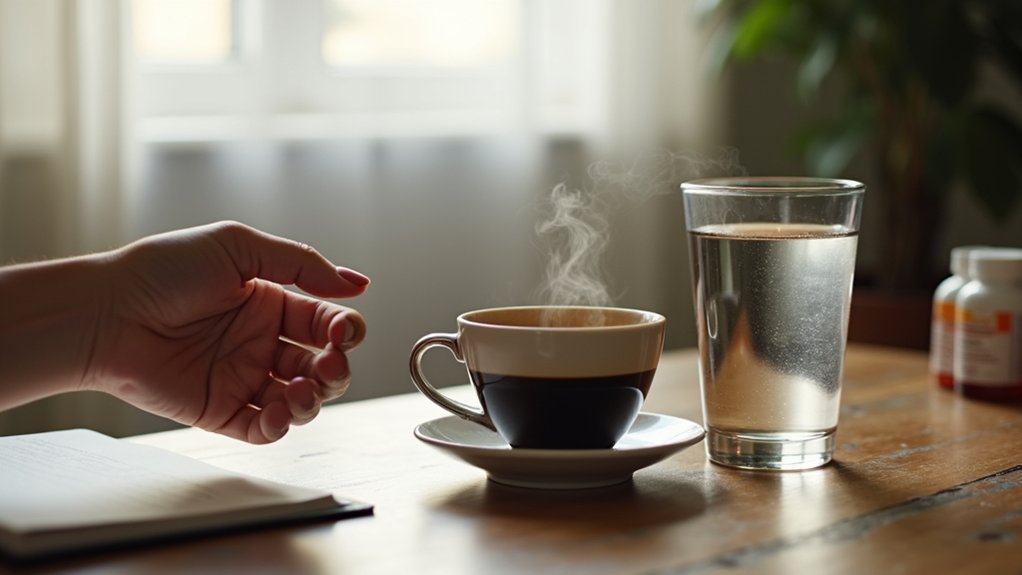
Safe caffeine management during alcohol detox requires careful attention to both timing and quantity. You should limit your intake to no more than one cup of coffee or tea daily during active detox, as excessive consumption can worsen anxiety, insomnia, and restlessness.
Your body’s adenosine receptor modulation becomes particularly sensitive during withdrawal. Caffeine blocks these receptors, potentially intensifying jitters and disrupting sleep patterns essential for recovery. Additionally, metabolic enzyme interactions matter, CYP1A2 processes 90% of caffeine in your liver, and alcohol can prolong caffeine’s half-life. Severe withdrawal symptoms like delirium tremens can be fatal due to the extreme stress placed on your body and nervous system, making careful substance management critical. Since withdrawal symptoms typically peak 24-72 hours after your last drink, this period requires the most vigilant caffeine restriction.
To maintain hydration without overstimulation, switch to decaf coffee or herbal teas. These alternatives let you preserve your routine while avoiding the diuretic effects that compound dehydration from withdrawal symptoms. Focus on water-rich foods to support fluid replenishment throughout your detox process. Remember that withdrawal management alone is not an effective treatment for alcohol use disorder, so comprehensive care should extend beyond managing caffeine and other substances during detox.
Frequently Asked Questions
Can Caffeine Withdrawal Worsen Alcohol Detox Symptoms Simultaneously?
Yes, caffeine withdrawal can worsen alcohol detox symptoms simultaneously. When you reduce caffeine dosage levels during the alcohol withdrawal timeline, you’re placing dual stress on your nervous system. You’ll likely experience compounded anxiety, headaches, and irritability as both substances leave your body. Research suggests this combination amplifies fatigue and mood instability. You shouldn’t attempt withdrawing from both simultaneously without medical supervision, as the overlapping symptoms can compromise your recovery process.
Does Decaf Coffee Still Interact Negatively With Alcohol Recovery?
Decaffeinated coffee consumption generally poses fewer risks during alcohol recovery, but it’s not entirely neutral. You should still limit your caffeine intake levels to no more than two cups daily, as even small amounts can affect neurotransmission. While decaf retains liver-protective benefits and causes less nervous system stimulation, relying on it may perpetuate dependency on external substances for mood regulation. Consult your treatment team before incorporating decaf into your recovery routine.
How Long After Detox Can I Safely Resume Normal Caffeine Consumption?
You should wait at least 7-12 days post-detox before reintroducing caffeine, then monitor your response for 30 days. Start with one cup daily and increase by 25% weekly increments. During this period, support your energy naturally through a balanced diet and moderate exercise. This cautious approach helps prevent triggering cravings or rebuilding tolerance too quickly. Track your daily intake carefully to maintain control during early recovery.
Will Caffeine Affect the Medications Prescribed During Alcohol Detox Treatment?
While there’s limited direct research on caffeine’s medication interactions with standard alcohol detox drugs like benzodiazepines, you should exercise caution. Caffeine can potentiate certain drug effects, including seizures and tachycardia with amphetamine-related substances. Your withdrawal management may also be complicated since caffeine’s metabolism varies based on genetics and other medications you’re taking. Discuss your caffeine intake with your treatment team to verify it doesn’t interfere with your prescribed detox medications.
Are Energy Drinks More Dangerous Than Coffee During Alcohol Recovery?
Yes, energy drinks pose greater risks than coffee during alcohol recovery. They contain unpredictable caffeine doses, additional stimulants, and high sugar content that can destabilize your sleep patterns and cause erratic energy levels. Studies show energy drinks dramatically increase cardiac stress, while coffee doesn’t produce the same effect. Many treatment programs specifically ban energy drinks but permit moderate coffee consumption. You should avoid energy drinks and discuss any caffeine use with your treatment team.