Your blood alcohol concentration (BAC) measures grams of ethanol per 100 mL of blood, peaking within 30, 70 minutes of drinking. At 0.08%, you’re legally impaired in most U.S. states. Above 0.25%, you risk blackout and organ stress. Your weight, sex, and food intake all influence how fast your BAC climbs. It drops at roughly 0.015% per hour regardless of hydration or activity. Using a blood alcohol level chart and understanding far more about how these numbers affect you specifically is essential.
What Do Blood Alcohol Level Numbers Actually Mean?
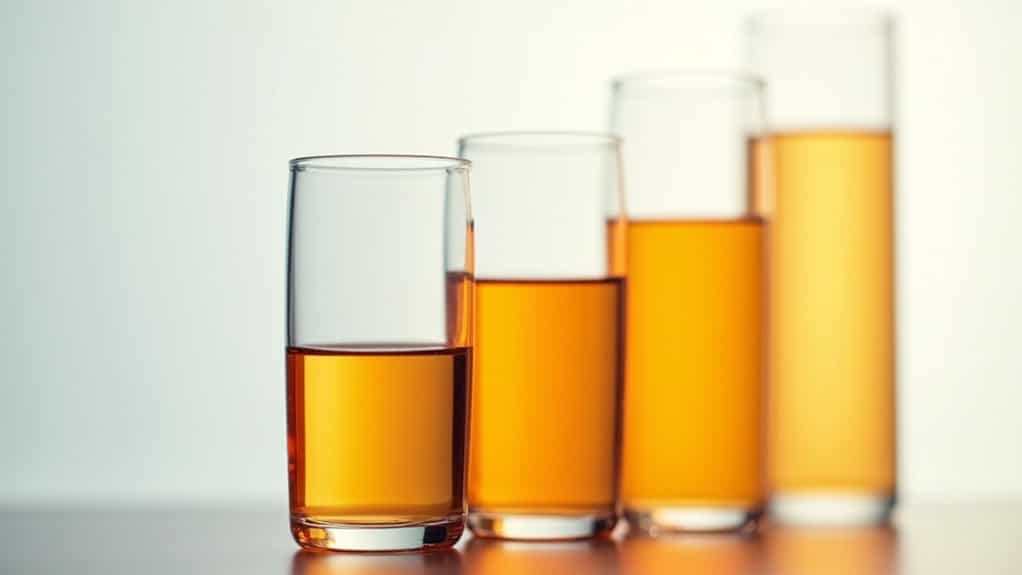
Blood alcohol concentration (BAC) measures the percentage of alcohol in your bloodstream, expressed as grams of alcohol per 100 milliliters of blood. A blood alcohol content percentage of 0.08% means 0.08 grams of ethanol per 100 mL of blood, not 8%. Your blood alcohol level typically peaks within 30, 70 minutes after drinking, depending on your alcohol absorption rate and whether you’ve eaten.
As a central nervous system depressant, ethanol slows neural signaling proportional to rising BAC. A breathalyzer test estimates this concentration by measuring ethanol in exhaled air. The legal intoxication limit for driving in most states sits at 0.08%, where motor function, judgment, and coordination measurably decline. Standard drink measurement helps you estimate how quickly you’ll approach that threshold based on your body weight and alcohol metabolism rate. Factors such as your number of drinks, weight, and sex all play a significant role in determining how quickly your BAC rises.
Why BAC Affects Everyone Differently: Weight, Sex, and Food
Although two people can drink the same amount of alcohol, their BAC levels can differ dramatically based on body weight, sex, and food intake. Several physiological factors directly shape your BAC:
Two people drinking the same amount can have vastly different BAC levels depending on weight, sex, and food intake.
- Weight and body composition, Greater body water content dilutes alcohol more effectively; higher muscle mass lowers BAC while fat tissue increases it.
- Gender differences, Women produce less alcohol dehydrogenase, carry more fat tissue, and experience hormonal fluctuations that slow alcohol metabolism, raising BAC faster than in men.
- Absorption rate, Your body absorbs alcohol primarily through the stomach; food intake profoundly slows this process.
- Food type, High-fat and high-protein foods delay absorption most effectively, reducing peak BAC.
Understanding these variables helps you anticipate how alcohol actually affects your body. Frequent drinkers may develop increased alcohol metabolism, causing them to appear less intoxicated than their actual BAC would suggest.
Blood Alcohol Level Chart: From Mild Buzz to Blackout
As your BAC climbs from 0.01% to levels above 0.25%, alcohol progressively disrupts nearly every system your brain controls, from judgment and coordination to breathing itself. At subclinical levels, impairment level classification shows minimal effects, though field sobriety test results already detect subtle reaction time delays. Around 0.055% BAC, stimulation peaks before declining sharply. Between 0.09, 0.25%, you’re visibly impaired, speech slurs, coordination fails, and blackouts emerge. Body weight, alcohol distribution, and gender differences in alcohol metabolism mean your breath alcohol concentration can spike faster than expected. Above 0.25%, liver function can’t compensate, even as the alcohol dehydrogenase enzyme and acetaldehyde metabolism work continuously. Blood alcohol concentration above 0.35% risks coma. Liver metabolism clears only 0.015% per hour, there’s no shortcut.
Legal Blood Alcohol Limits in the U.S. and Abroad
When it comes to legal driving limits, the U.S. applies a 0.08% BAC threshold for most non-commercial adult drivers, a federal standard established in 1998 through a NHTSA initiative, though Utah stands apart at 0.05%, aligning with norms common across many other countries.
The U.S. sets its legal driving limit at 0.08% BAC, while Utah leads the nation at 0.05%.
Key alcohol-related legal regulations you should know:
- Commercial drivers face a stricter 0.04% blood alcohol concentration limit nationally.
- Drivers under 21 encounter near-zero tolerance laws addressing bac levels and impairment early.
- International 0.05% bac thresholds are increasingly common, with Hawaii and Illinois proposing similar reductions.
- Enhanced penalties activate at 0.15%, 0.20% across multiple states, reflecting factors affecting bac levels and severity.
Public health alcohol education and alcohol harm reduction awareness consistently support lower legal bac 0.08 standard reassessments, given that alcohol intoxication symptoms and impairment begin below 0.08%.
How Fast Does Your BAC Actually Drop Per Hour?

Once your BAC peaks, it drops at a fixed, predictable rate, roughly 0.015% per hour on average, with a range of 0.015% to 0.020% depending on individual metabolic factors. Your liver’s enzymes determine this alcohol elimination rate, not your alcohol tolerance, hydration, or activity level.
For bac chart interpretation, consider this: reaching bac 0.08 legal intoxication level, means you’ll need roughly 5, 6 hours to reach zero. Metabolism variability between individuals and body composition and alcohol distribution affect your peak blood alcohol concentration, but the decline rate stays relatively consistent. Heavy drinkers may process slightly faster.
Ignoring this timeline raises your alcohol poisoning risk and alcohol overdose risk. Alcohol impairment symptoms persist until your BAC fully clears, time remains the only reliable solution.
Frequently Asked Questions
Can Medications Interact With Alcohol to Raise BAC Faster?
Yes, certain medications can raise your BAC faster by inhibiting alcohol metabolism or slowing absorption regulation. Verapamil blocks alcohol-metabolizing enzymes, prolonging elevated BAC levels. Erythromycin increases BAC while reducing its own efficacy. Cough medicines and antidepressants also accelerate BAC rise when combined with alcohol. Additionally, products like NyQuil and mouthwashes contain alcohol themselves, further elevating your readings. You should always consult your healthcare provider before combining alcohol with any medication.
What Symptoms Indicate Someone Needs Emergency Medical Help Immediately?
Call emergency services immediately if you observe slow or irregular breathing, fewer than 8 breaths per minute, gaps exceeding 10 seconds between breaths, or complete unresponsiveness. Watch for bluish or pale skin, cyanosis around the lips and fingernails, seizures, repeated vomiting with a dulled gag reflex, or inability to wake someone up. These signs indicate potentially fatal alcohol poisoning, where the brainstem’s respiratory and cardiovascular control centers are critically suppressed.
How Do Breathalyzers Actually Measure Alcohol in Your Breath?
When you breathe into a breathalyzer, it captures your deep-lung air and analyzes the alcohol concentration using one of several methods. Electrochemical fuel cells oxidize ethanol, generating a measurable electrical current. Infrared spectroscopy detects alcohol by measuring how it absorbs light at specific wavelengths. Chemical reactions change potassium dichromate from orange to green. The device then applies a 2100:1 partition ratio, converting your breath alcohol concentration into an estimated blood alcohol concentration.
Does Drinking Water Between Alcoholic Drinks Lower Your BAC?
Drinking water between alcoholic drinks doesn’t lower your BAC. Your liver metabolizes alcohol at roughly 0.015% per hour, and water can’t accelerate that enzymatic process. What water does do is prevent dehydration, which would otherwise concentrate alcohol in your bloodstream and push your BAC higher. So while staying hydrated helps you avoid worsening intoxication, it doesn’t eliminate alcohol faster. Only time allows your liver to fully clear alcohol from your system.
How Many Standard Drinks Equal One Beer or Glass of Wine?
One 12-ounce beer at 5% ABV equals one standard drink, containing 14 grams of pure alcohol. Similarly, you’d count one 5-ounce glass of 12% ABV wine as one standard drink. However, you’ll want to check labels carefully, a 12-ounce craft beer at 10% ABV counts as two standard drinks, and larger wine pours or higher-ABV varieties can markedly exceed a single standard drink measurement.