
Both alcohol and cannabis alter your brain chemistry from the first dose, and the effects compound in ways you might not expect. Alcohol accelerates THC absorption, driving blood concentrations dangerously high. Long-term, alcohol strips gray matter and damages your liver, heart, and pancreas, while cannabis poses greater psychiatric risks, including psychosis and accelerated brain aging. Together, they amplify impairment, addiction risk, and organ damage tremendously. Understanding how weed and alcohol affect your health in alarming real ways reveals that the full picture is more alarming than most people realize.
How Alcohol and Cannabis Affect Your Body From the First Dose
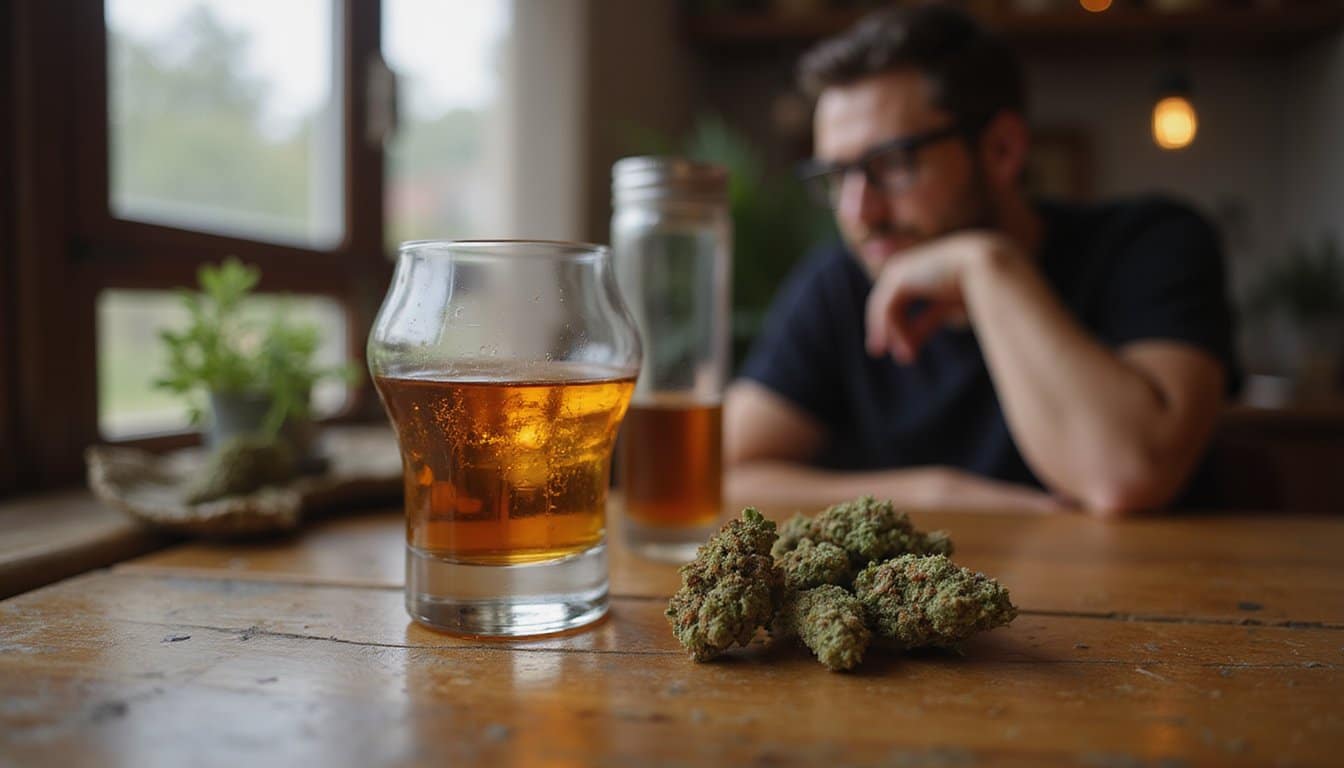
When you consume alcohol and cannabis together, the effects begin almost immediately and go beyond simple addition, they compound. Alcohol pharmacokinetics directly influence cannabinoid pharmacology, alcohol accelerates THC absorption, producing markedly higher peak blood concentrations than cannabis alone. A 2015 study confirmed this interaction, showing elevated THC levels even at low doses when alcohol preceded inhalation. THC then stimulates CB1 receptors, disrupting your dopamine reward system and intensifying euphoria while simultaneously suppressing glutamate and amplifying GABA inhibition. Your coordination, reaction time, and judgment deteriorate faster than either substance causes independently. This accelerated impairment dramatically increases impaired driving risk and behavioral unpredictability. Repeated combined use can also accelerate neurological adaptation, lowering your threshold for substance use disorder development sooner than single-substance exposure typically would. Cannabis itself contains over 500 different chemical substances, meaning the compounds interacting with alcohol extend well beyond THC alone.
How Both Drugs Damage Your Heart and Brain Over Time
Those immediate impairment effects don’t stop at intoxication, repeated exposure reshapes the brain’s physical structure and places measurable strain on the cardiovascular system over time. Alcohol produces more damaging long-term effects on your brain than cannabis, driving widespread gray matter volume loss, cortical thinning, and declining white matter integrity. Heavy adolescent drinking accelerates frontal gray matter loss in a dose-dependent pattern. Cannabis reduces orbitofrontal gray matter but paradoxically increases connectivity, unlike alcohol’s broader structural deterioration. For your heart, alcohol’s cumulative damage proves more pronounced, particularly when combined with cannabis, which amplifies cardiovascular strain. Marijuana impacts working memory and brain function in 63% of heavy lifetime users. Co-use accelerates frontoparietal cortical thinning, compounding both brain and heart risks beyond what either substance causes independently. Regular marijuana users show significantly higher fractional anisotropy of the forceps minor tract, a white matter pathway connecting the brain’s frontal lobes, suggesting structural white matter changes that accompany long-term cannabis use.
Cancer, Liver, and Organ Damage: How Alcohol and Weed Compare

When you drink alcohol, you’re consuming a substance the US Department of Health classifies as a known human carcinogen, one that raises your risk of mouth, breast, and other cancers even at low consumption levels through acetaldehyde’s direct DNA damage. Chronic alcohol use also burdens your liver, pancreas, and immune system through oxidative stress and toxic metabolite exposure, contributing to cirrhosis and multi-organ dysfunction over time. Cannabis, by contrast, carries no established causal link to any cancer type and lacks documented liver or pancreatic damage mechanisms, though it’s not without risk, particularly for your cardiovascular system with regular use. In fact, the National Academies of Sciences found insufficient evidence of cannabis increasing overall cancer risk.
Alcohol’s Cancer-Causing Effects
Alcohol carries a well-documented cancer risk that cannabis does not comparably share. Ethanol and its toxic byproduct from acetaldehyde metabolism directly damage DNA at multiple body sites. The alcohol dehydrogenase enzyme converts ethanol into acetaldehyde during liver metabolism, generating a highly carcinogenic compound even at low consumption levels. In 2022, alcohol-attributed cancers exceeded 538,000 US cases, representing 5.4% of all cancers. Seven cancers show causal links to alcohol, including oral, esophageal, liver, breast, and colorectal cancers. Alcohol-related cancer risks follow a clear dose-response pattern, meaning even light drinking elevates risk. Women drinking one daily drink face a 19-in-100 lifetime risk of alcohol-related cancer compared to 17-in-100 for those drinking less than weekly. No safe consumption threshold exists.
Organ Damage Compared
Comparing organ damage between alcohol and cannabis reveals a stark imbalance in physiological harm. Your liver disease risk from alcohol escalates markedly with chronic consumption, progressing from fatty liver disease to alcoholic hepatitis and ultimately liver cirrhosis. These conditions impair your liver’s detoxification capacity and directly contribute to organ failure and mortality. Cannabis shows no comparable liver pathology in clinical evidence.
Alcohol also damages your pancreas, ranking as the leading cause of pancreatitis, which can produce permanent organ dysfunction. The cardiovascular effects of cannabis present differently, linking to increased heart attack risk and arrhythmias, while alcohol drives cardiomyopathy and hypertension. Alcohol’s acetaldehyde byproduct additionally triggers systemic inflammation affecting your stomach, immune function, and nervous system. Overall, alcohol demonstrates substantially higher organ toxicity than cannabis across multiple physiological systems.
Weed’s Lower Organ Risks
That imbalance in organ toxicity becomes especially clear when you examine cancer and liver disease specifically. When cannabis interacts with your endocannabinoid system through cannabinoid receptors CB1 and cannabinoid receptors CB2, it doesn’t produce acetaldehyde, alcohol’s DNA-damaging byproduct. Here’s what the evidence shows:
- Marijuana produces fewer toxic liver byproducts than alcohol during metabolism
- Cannabis shows no confirmed direct cancer link, unlike alcohol’s WHO Group 1 carcinogen classification
- Marijuana abuse generates lower inflammatory cytokines than alcohol in patient-derived cells
- Cannabis doesn’t damage your pancreas or heart the way chronic alcohol misuse does
Your liver still metabolizes cannabis, but the resulting compounds carry markedly less oxidative stress. The toxicity profile simply isn’t comparable, alcohol’s organ damage scope is considerably broader.
Which One Hits Your Mental Health Harder?

Both substances take a measurable toll on mental health, but the research suggests cannabis carries a heavier cognitive and psychiatric burden. Early cannabis exposure considerably raises your risk of depression, suicidal ideation, and cannabis-induced psychosis. High-THC products intensify anxiety symptoms and accelerate brain aging by 2.8 years, nearly five times alcohol’s 0.6-year figure. Long-term use disrupts hippocampal function, compounding cognitive impairment and increasing vulnerability to memory decline.
Alcohol-related mood disorders follow a different pattern. While alcohol temporarily reduces anxiety, it reinforces dangerous self-medication cycles and ranks among the primary addiction risk factors for social anxiety and panic disorders. Alcohol’s mental health effects concentrate more in emotional dysregulation than structural brain damage. Both substances compromise your prefrontal function, but cannabis demonstrably poses the greater psychiatric risk.
How Addictive Is Weed Compared to Alcohol?
When you compare addiction potential, research shows alcohol carries a considerably higher risk, with up to 20% of users developing dependence, while roughly 30% of cannabis users may develop cannabis use disorder, though that disorder is generally rated less severe. You face no risk of a fatal cannabis overdose, whereas alcohol contributes to more than 30,000 deaths annually in the U.S., with marijuana’s mortality risk estimated at 114 times lower than alcohol’s. Long-term dependency on either substance can impair cognitive function, disrupt daily performance, and strain organ health, but chronic alcohol dependence is consistently linked to more severe physiological damage across multiple organ systems.
Addiction Rates Compared
Alcohol is generally considered more addictive than cannabis, though both substances carry measurable dependence risks. As a central nervous system depressant, alcohol activates brain reward circuitry intensely, driving compulsive use patterns. Polysubstance use further complicates dependence trajectories, with neuroinflammation and oxidative stress accelerating neurological damage.
Key dependence statistics you should know:
- 30% of chronic cannabis users develop cannabis use disorder
- Cannabis dependence doubles your risk for persistent alcohol problems
- Marijuana-dependent alcohol users are three times more likely to develop alcohol use disorder
- Dual users still perceive alcohol as considerably more addictive than cannabis
These numbers confirm that while cannabis carries lower standalone addiction risk, combining both substances substantially elevates your vulnerability to long-term dependence complications.
Overdose Risks Examined
Marijuana overdose impossibility is well-supported, a lethal THC dose would require consuming between 15 and 70 grams, equivalent to smoking 238 to 1,113 joints in a single day. No confirmed fatal THC overdoses exist. When you combine both substances, however, alcohol elevates your blood THC concentrations, intensifying impairment and increasing your likelihood of accidents, injuries, and alcohol poisoning.
Long-Term Dependency Effects
Both substances carry addiction potential, but they differ remarkably in how dependence develops and how intensely it affects long-term health. Research confirms alcohol produces stronger dependency outcomes than cannabis, tetrahydrocannabinol, or cannabidiol compounds combined.
Key dependency distinctions you should recognize:
- Alcohol users develop tolerance development faster and face elevated dependence rates
- Cannabis dependence doubles your likelihood of receiving an AUD diagnosis
- Alcohol produces documented physical withdrawal symptoms; marijuana shows none clinically
- Alcohol’s health costs reach $165 per user versus $20 for cannabis users
If you’re marijuana-dependent and also drink, you’re three times more likely to develop alcohol dependence. Daily or near-daily cannabis use has surged 269% since 2008, making understanding these dependency differences increasingly crucial for your long-term health decisions.
Overdose and Death: The Real Numbers for Alcohol and Cannabis
When comparing the two substances, the overdose and mortality data tell a striking story. Alcohol-induced mortality rates reached 47,938 deaths in 2023, with an age-adjusted rate of 12.6 per 100,000. Total alcohol-related fatalities climb to 95,000 annually, including 18,164 from alcoholic liver disease. Alcohol overdose deaths account for roughly 2,200 lives yearly, six people daily.
Cannabis overdose data presents a stark contrast. No recorded direct fatal cannabis overdoses exist across available datasets. In 2024, drug overdoses totaled 79,384, with cannabis unspecified as a contributing factor.
Comparative death trends confirm alcohol’s dominance as the deadlier substance. Alcohol appeared in 16% of drug overdoses, and combined alcohol, drug, and suicide fatalities exceeded 200,000 in 2023. These numbers reflect measurable, documented consequences you should take seriously.
How Alcohol and Weed Impair Your Brain Behind the Wheel
Driving under the influence of alcohol or cannabis impairs the neural systems you rely on to operate a vehicle safely. Both substances degrade the cognitive and motor functions essential for safe driving:
Both alcohol and cannabis impair the neural systems critical for safe driving, degrading essential cognitive and motor functions.
- Reaction time slows measurably after cannabis inhalation, with peak impairment occurring 20, 40 minutes post-use.
- Judgment deteriorates as alcohol sequentially disrupts orbitofrontal function, then motor coordination, then global cognition.
- Driving impairment from cannabis remains detectable for 4, 5 hours after inhalation.
- Combined use produces additive impairment, elevating THC blood concentrations and worsening lateral vehicle control beyond either substance alone.
You may feel capable of driving before impairment fully clears. That gap between perceived and actual ability is precisely where serious accidents occur.
Alcohol vs. Weed: Which One Is Actually More Dangerous?
Comparing alcohol and cannabis on health risk reveals a consistent pattern across multiple harm categories. Alcohol disrupts gamma aminobutyric acid neurotransmission and glutamate neurotransmission simultaneously, destabilizing your neural circuitry more broadly than cannabis does. Alcohol also impairs serotonin regulation and floods your nucleus accumbens with dopamine, accelerating dependency. By contrast, cannabis carries a safety ratio exceeding 1,000:1, making fatal overdose virtually impossible, while ethanol’s ratio sits near 10:1. Alcohol costs $165 per user in health expenses versus $20 for cannabis. It causes liver disease, pancreatitis, and produces toxic acetaldehyde, a known carcinogen. Cannabis shows no comparable organ toxicity. Across 10 of 13 measured harm categories, alcohol is ranked as more dangerous. Neither substance is safe, but the data consistently positions alcohol as the greater health threat.
Safe Limits, Red Flags, and When Either Becomes a Problem
Both alcohol and cannabis lack a universally established “safe” threshold, yet understanding how much crosses into harmful territory can help you make more informed decisions.
Watch for these evidence-based red flags:
- Memory disruption, Daily cannabis use impairs hippocampus-dependent recall and processing speed.
- Emotional dysregulation, Chronic alcohol elevates cortisol stress response, destabilizing amygdala-driven mood regulation through altered gene expression.
- Cognitive decline, Both substances compromise prefrontal cortex function, impairing judgment, decision-making, and impulse control.
- Respiratory and cardiovascular damage, Heavy cannabis use reduces lung function by 15%, while regular use independently raises heart attack and stroke risk.
Frequency, dosage, and age of onset determine severity. If you’re noticing persistent fatigue, mood shifts, or declining performance, consult a healthcare professional immediately.
Frequently Asked Questions
Can Mixing Alcohol and Cannabis Together Make Health Effects Significantly Worse?
Yes, mixing alcohol and cannabis can profoundly worsen health effects. When you combine both substances, alcohol increases THC absorption in your bloodstream, amplifying intoxication beyond what either substance produces alone. You’ll likely experience greater impairment in coordination, reaction time, and decision-making. Research shows you’re twice as likely to drive impaired, and you face higher risks of developing substance use disorders, cognitive decline, and serious mental health consequences compared to using either substance independently.
How Does Cannabis Affect the Body Differently When Eaten Versus Smoked?
When you eat cannabis, you experience a delayed onset of one to two hours, but the effects last considerably longer and hit harder. Your liver converts THC into 11-OH-THC, a more potent metabolite, intensifying intoxication. You’re also at higher risk of accidental overconsumption because you can’t gauge the delayed effects accurately. Smoking delivers immediate effects but exposes your lungs to combustion toxins, causing inflammation and oxidative stress that edibles completely avoid.
Does Alcohol or Cannabis Interact More Dangerously With Common Prescription Medications?
Both substances pose serious risks, but cannabis interacts more broadly with prescription medications. CBD alone interacts with over 540 medications, while THC affects approximately 400. However, alcohol’s interactions can be immediately life-threatening, it can cause fatal breathing suppression with opioids, dangerous bleeding with blood thinners, and severe liver damage with acetaminophen. Your safest approach is consulting your healthcare provider before combining either substance with any prescription medication, as interactions vary extensively by individual circumstances.
Can Cannabis Use Actually Help Reduce How Much Alcohol Someone Drinks?
Yes, cannabis can reduce how much alcohol you drink. Clinical trials show that participants who smoked higher-THC cannabis consumed up to 27% less alcohol than placebo groups and delayed their first drink considerably. Survey data reinforces this, with 62.6% of cannabis beverage users reducing or stopping alcohol consumption. However, you shouldn’t treat cannabis as a therapeutic substitute, since it carries its own addiction risks and potential for problematic use requiring careful consideration.
How Long Do Alcohol and Cannabis Remain Detectable Inside Your Body?
Alcohol remains detectable in your blood for 6, 12 hours, breath for up to 24 hours, urine for 12, 80 hours depending on intake, and hair for up to 90 days. Cannabis clears more slowly, THC’s metabolites can linger in your urine for days or weeks based on how frequently you use it. Your liver processes both substances, but detection windows vary considerably with consumption patterns, metabolism, and the testing method used.