
Twisted Tea isn’t technically beer, it’s a flavored malt beverage (FMB). You’re drinking a product that starts with the same fermented malted barley base as beer, but manufacturers strip away traditional beer characteristics like color and odor before adding real brewed black tea and natural lemon flavors. At 5% ABV, it matches most standard lagers in strength while delivering a sweetened iced tea taste. Understanding the full brewing process reveals why this classification matters.
If you are asking yourself whether your drinking needs treatment, a short assessment with admissions answers it, and our guide to alcohol treatment shows every level of care.
What Exactly Is Twisted Tea?
So what makes Twisted Tea different from the beer sitting next to it on store shelves? The answer lies in its classification. Twisted Tea isn’t technically beer, it’s a flavored malt beverage marketed as hard iced tea.
You’ll find it contains a brewed malt base using barley, water, and fermentation processes similar to beer production. However, the addition of real brewed black tea, natural lemon flavors, and sweeteners like high fructose corn syrup creates a distinctly different product profile. Because it’s brewed similarly to beer, Twisted Tea is not gluten-free and should be avoided by those with gluten sensitivities.
Is Twisted Tea malt liquor? Not exactly. While it shares malt-derived alcohol characteristics, it’s categorized separately as a flavored malt beverage. At 5% ABV, it matches many lagers in strength but delivers a sweetened lemon iced tea taste rather than traditional beer flavors. The black tea used in the beverage also contributes approximately 30 milligrams of caffeine per 12-ounce serving, something you won’t find in typical beers.
The Malt Beverage Classification Explained
You’ll find that the term “malt beverage” has a specific federal definition requiring fermentation of malted barley with hops, covering products from traditional beers to flavored drinks like Twisted Tea. The key distinction lies in how the alcohol is produced, beer uses straightforward malt fermentation, while flavored malt beverages start with a neutral malt base that’s stripped of beer-like characteristics before flavoring. Products like Twisted Tea require a fanciful name and statement of composition that includes the base class along with any added flavoring or coloring ingredients. Understanding this classification helps you see why Twisted Tea sits in the same regulatory category as beer despite tasting nothing like it. This category broadly encompasses all fermented beverages manufactured from malt or malt substitutes, including beer, ale, porter, and stout. To remain in the malt beverage tax category, these products must derive at least 51% of alcohol from the malt base.
What Makes Malt Beverages
Malt beverages fall under a specific legal framework that sets them apart from distilled spirits and wine. To qualify, the base must contain at least 25% malt and undergo alcoholic fermentation with yeast. You’ll find ABV typically ranges from 0.5% to 21%, anything higher shifts into spirits classification.
So, is Twisted Tea considered a beer? Technically, it meets federal malt beverage standards through its fermented malt base. Are Twisted Teas beer in the traditional sense? No, they’re classified as flavored malt beverages, requiring specific labeling with modifiers or composition statements.
Is Twisted Tea liquor? Absolutely not. It contains no distilled alcohol, no vodka, no wine. The malt-derived alcohol keeps it firmly within TTB’s beer and malt beverage regulations, not the distilled spirits category.
Beer Versus Malt Drinks
Federal regulations draw clear lines between beer and flavored malt beverages, though both fall under the same TTB oversight. When you compare twisted tea vs beer, you’ll find both require a minimum 25% malt base and 7.5 pounds of hops per 100 barrels. However, FMBs exceeding 6% ABV must contain 97% malt base.
The TTB classifies both traditional beer and flavored malt beverages under the “beer” category for regulatory purposes. You’ll notice the key distinction lies in flavor profiles, FMBs use neutral malt bases stripped of color and odor, then add natural or artificial flavors that differ from traditional beer taste. Products like Twisted Tea must carry specific labeling: a class designation plus disclosure of flavors, colors, and additives per 27 CFR 7.144. Under the Internal Revenue Code, beer specifically requires 0.5% or more alcohol by volume to meet the legal definition.
How Twisted Tea Is Brewed
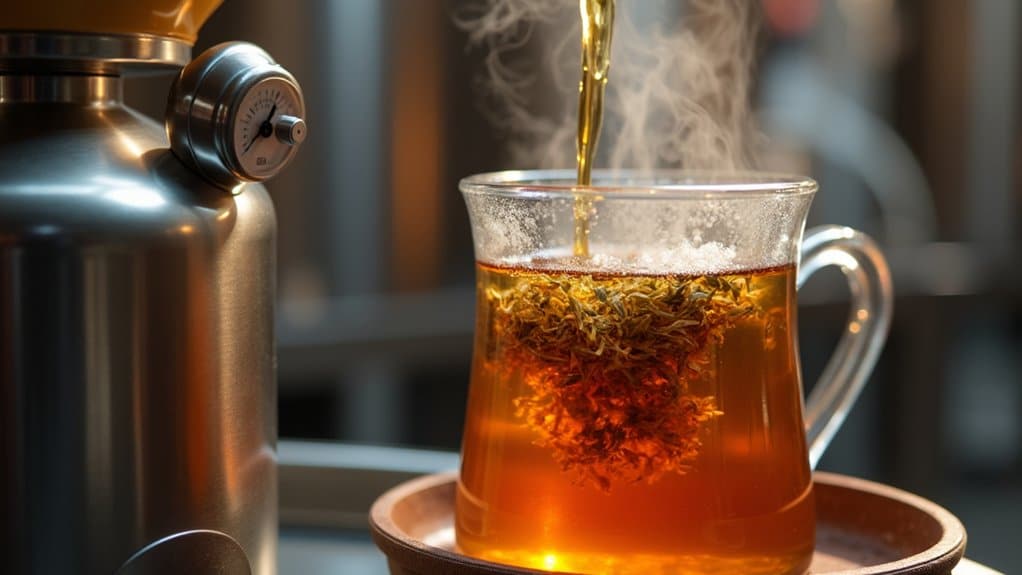
You might assume Twisted Tea contains vodka or spirits, but its alcohol comes entirely from fermenting malted barley, the same malt base used in traditional beer production. The brewing process combines this fermented malt with real brewed black tea, natural flavors, and lemon juice to create its signature taste profile. There’s no hard liquor involved; you’re drinking a flavored malt beverage with roughly 5% ABV, comparable to most standard beers on the market. Home brewers attempting to replicate this profile often start with a light lager recipe as their base before adding tea and fruit components. The final product is then carbonated and pasteurized before being packaged for distribution. This unique production method sets Twisted Tea apart from many other alcoholic beverages on the market. While some may be curious about the different alcohol types in twisted tea drinks, it’s important to note that the beverage’s appeal lies in its refreshing combination of flavors rather than the type of alcohol.
Malt Fermentation Process
Because Twisted Tea relies on malt fermentation rather than distilled spirits, its production mirrors traditional beer brewing at several key stages. You’ll find the process starts with malted barley that’s been germinated and kiln-dried to activate starch-converting enzymes. The malt is milled into grist, then combined with hot water during mashing to produce wort, a sugary liquid calibrated to achieve the target 5% ABV.
Once you pitch yeast into the cooled wort, fermentation converts sugars into ethanol and carbon dioxide. Brewers select yeast strains for high attenuation and clean profiles, ensuring the malt base remains neutral rather than beer-forward. Unlike traditional beer, the goal here is to mask the malt taste and create a refreshing tea-like flavor profile. Post-fermentation, the base undergoes filtration to strip particulates and strong malt characteristics. This creates a smooth, clarified foundation that won’t compete with the tea flavors added during blending. The filtered malt base is then blended with black tea leaves, sugar, and other flavorings to create the signature iced tea taste. Due to the barley used in creating the malt flour, the final product is not gluten-free, which is an important consideration for those with gluten sensitivities.
Black Tea Integration
Once the malt base achieves its neutral, clarified state, brewers shift focus to the ingredient that defines Twisted Tea’s identity: real brewed black tea. You’ll find the tea component is produced through conventional hot-water steeping, then cooled and filtered before blending with the alcoholic base.
| Parameter | Process Detail | Purpose |
|---|---|---|
| Brewing Method | Hot-water steeping | Extracts flavor, tannins |
| Tea Format | Concentrated brew | Allows ratio flexibility |
| Integration Point | Post-fermentation | Preserves tea volatiles |
| Filtration | Pre-blend filtering | Guarantees product clarity |
| Blending Ratio | Variable by variant | Controls tea intensity |
The tea doesn’t participate in fermentation, it’s strictly a flavoring agent. Brewers calibrate concentration so black tea’s earthy, tannic backbone remains prominent after dilution with malt base, water, and sweeteners.
No Liquor Added
Three key factors separate Twisted Tea from spirit-based ready-to-drink cocktails: its fermented malt base, the complete absence of distilled alcohol, and its regulatory classification as a flavored malt beverage (FMB). You won’t find vodka, rum, or grain alcohol in the formula, only alcohol derived from fermented malted barley.
This distinction affects where you’ll find Twisted Tea on store shelves. Retailers stock it alongside beer and hard seltzers, not in the spirits section. Taxation and labeling regulations align with FMB standards rather than distilled spirit requirements.
At approximately 5% ABV, you’re consuming alcohol comparable to standard beer. The effects mirror drinking a similarly-strength lager, not a mixed cocktail. This malt-only approach positions Twisted Tea as a beer alternative within the hard iced tea category, distinct from spirit-based RTD competitors.
Alcohol Content Compared to Traditional Beer

Although Twisted Tea’s sweet tea flavor sets it apart from traditional beer, its alcohol content tells a different story. Standard Twisted Tea Original clocks in at 5% ABV, placing it squarely within the 4%, 6% range typical of American lagers and ales. A 12 oz serving delivers approximately 0.6 oz of pure alcohol, equivalent to one U.S. standard drink. For those curious about how much alcohol in Twisted Tea, the answer is consistent with its alcohol by volume. This means that while it may taste sweet and refreshing, it’s essential to consume it responsibly, just like any other alcoholic beverage.
You’ll find larger formats shift the equation considerably. A 24 oz can at 5% ABV equals two standard drinks in a single container. Twisted Tea Extreme pushes further at 8% ABV, with a 24 oz can approximating more than three standard drinks, comparable to imperial or high-gravity beers. The sweet tea taste can mask the alcohol’s effects, potentially leading to a false sense of sobriety while drinking.
From a regulatory standpoint, authorities treat Twisted Tea like beer-based malt beverages for taxation and age restrictions, confirming its alcohol parity with traditional beer.
Key Ingredients That Set Twisted Tea Apart
Five core ingredient categories distinguish Twisted Tea from conventional beers and spirits. You’ll find a malt base providing the 5% ABV through barley fermentation, not vodka or grain alcohol. Real black tea leaves and brewed tea extract deliver authentic flavor with natural caffeine content.
The citrus profile comes from natural lemon flavoring and citric acid, creating that signature tartness. You’re consuming approximately 23 grams of sugar per serving from glucose, fructose, and high fructose corn syrup, significantly higher than most beers. The recipe was inspired by Southern sweet tea, which explains the emphasis on sweetness in the flavor profile.
Additional components include filtered water, sodium bicarbonate, and potassium sorbate for preservation. Natural and artificial flavors round out the formulation. This combination classifies Twisted Tea as a flavored malt beverage, placing it in a distinct market category separate from both traditional beers and spirit-based ready-to-drink products.
Nutritional Profile and Caffeine Content
Everything about Twisted Tea’s nutritional profile reflects its flavored malt beverage classification. A standard 12 fl oz Original delivers 194, 220 kcal, 26, 27 g carbohydrates, and approximately 22 g sugar. You’ll find zero fat and zero protein, calories derive entirely from alcohol and added sugars. The 22 grams of added sugar per serving exceeds the American Heart Association’s daily recommendations for sugar intake. Opting for Twisted Tea Light Lemon cuts your intake to 110 kcal and 9 g carbs per serving, representing a 40, 50% caloric reduction.
Regarding caffeine, the real brewed black tea base contributes naturally occurring caffeine, likely in the 30, 60 mg range typical of brewed tea. No synthetic caffeine appears on ingredient labels. You should note that combining caffeine with alcohol can mask intoxication symptoms without reducing actual impairment. The 5% ABV Original and 4% ABV Light both deliver significant caloric loads in larger 24 fl oz formats.
Frequently Asked Questions
Is Twisted Tea Gluten-Free or Safe for People With Gluten Sensitivities?
Twisted Tea isn’t gluten-free and you shouldn’t consider it safe if you have celiac disease or gluten sensitivities. It’s brewed using malted barley, a gluten-containing grain, and the gluten proteins persist through the brewing process since it’s not distilled. You’ll face potential autoimmune responses, digestive issues, and intestinal damage if you’re celiac. Always check product labels for allergen statements and contact the manufacturer directly to confirm current formulations before consuming.
Can You Drink Twisted Tea if You’re Allergic to Beer?
You shouldn’t drink Twisted Tea if you’re allergic to beer. Twisted Tea contains barley malt and follows a brewing process similar to beer production, which means it carries the same allergen risks. The barley malt serves as the primary alcohol base and represents the most likely trigger for beer-sensitive individuals. You’ll want to consult your physician before consuming any malt beverages, and always check product labels for allergen warnings.
Does Twisted Tea Taste Like Beer or More Like Regular Iced Tea?
Twisted Tea tastes much more like regular sweetened iced tea than beer. You won’t detect typical beer characteristics like hop bitterness or malty, grainy flavors. Instead, you’ll experience a sweet, lemony tea profile with about 23g of sugar per 12 oz masking the 5% ABV alcohol. The real brewed black tea delivers authentic tea tannins and flavor, while citric acid adds familiar lemon tartness, creating a invigorating hard iced tea experience.
Is Twisted Tea Carbonated or Flat Like Traditional Iced Tea?
You’ll find most Twisted Tea products have medium carbonation, giving you that invigorating fizz similar to beer. The carbonation’s added during production after blending the malt base with tea flavors. However, there’s an exception, Twisted Tea Extreme (8% ABV) comes completely flat, aligning more with traditional iced tea’s mouthfeel. So depending on which variant you’re drinking, you’ll experience either a crisp, fizzy texture or a smooth, non-carbonated finish.
What Flavors Does Twisted Tea Come in Besides the Original Lemon?
You’ll find Twisted Tea offers an extensive flavor portfolio beyond original lemon. Core options include Half & Half (tea-lemonade blend), Peach, Raspberry, Pineapple, and Blackberry. Citrus-forward variants feature Sweet Cherry Lime and Extreme Lemon. Berry selections encompass Black Cherry and Blueberry. For tropical profiles, you’ve got Mango and the spicy Mangonada with chamoy and chili lime. Limited releases like Rocket Pop and Extreme Blue Razz round out the lineup.