
Benzodiazepines remain the most effective and widely-proven treatment for alcohol withdrawal, with medications like diazepam and chlordiazepoxide leading the way. You’ll need careful medical supervision during treatment, as your doctor will monitor crucial signs and use standardized assessment tools to adjust medication dosing. Research shows that symptom-triggered benzodiazepine protocols offer better outcomes than fixed schedules, especially in hospital settings. Understanding the full spectrum of withdrawal management can help you make informed decisions about your care.
If you drink every day and want to stop, start with medically supervised detox: three to seven days, a nurse through the night, and medication matched to how you feel.
Understanding the Gold Standard: Benzodiazepine Treatment

Regarding treating alcohol withdrawal, benzodiazepines stand as the undisputed gold standard of care, backed by extensive clinical evidence and meta-analyses. These medications work by activating GABA-A receptors, effectively countering the CNS hyperexcitability that occurs during withdrawal. Meta-analyses demonstrate their superiority over placebo, with an odds ratio of 3.28. With an estimated 62 million alcoholics in India alone, the importance of having effective benzodiazepine treatment protocols cannot be overstated. Studies show that benzodiazepine treatment can result in fewer heavy drinking days among patients seeking recovery. A symptom-triggered dosing approach has shown better outcomes compared to fixed-schedule regimens.
When selecting the appropriate benzodiazepine, you’ll need to examine patient-specific considerations such as liver function, onset requirements, and duration needs. Common options include diazepam, chlordiazepoxide, and lorazepam. You must also carefully evaluate potential drug-drug interactions, particularly with other CNS depressants. While benzodiazepines carry minimal risk during short-term use, proper monitoring remains essential, especially in inpatient settings where you’re managing severe withdrawal symptoms or high seizure risk.
Essential Medical Monitoring and Assessment
Effective alcohol withdrawal treatment requires rigorous monitoring of essential signs, including blood pressure, heart rate, temperature, and oxygen saturation, particularly during the crucial initial 72 hours. You’ll need regular assessments using standardized tools like the CIWA-Ar scale to accurately measure withdrawal severity and guide medication adjustments. Patients typically receive benzodiazepine treatment, as these are considered the agents of choice for managing withdrawal symptoms. Your healthcare team must also closely monitor your electrolyte levels, as alcohol withdrawal can cause dangerous imbalances that require immediate correction. Prompt recognition of withdrawal symptoms is critical since approximately half of all alcohol use disorder patients will experience withdrawal when stopping or reducing alcohol consumption. The treatment approach often includes long-acting benzodiazepines like diazepam and chlordiazepoxide, which have proven more effective than short-acting alternatives.
Vital Signs Watch Protocol
The essential signs watch protocol forms a cornerstone of safe alcohol withdrawal management, requiring systematic monitoring of key physiological parameters. You’ll need to obtain baseline vitals immediately, including heart rate, blood pressure, temperature, and BAC levels. Serial cardiac monitoring becomes paramount for patients with cardiac history, while targeted fluid resuscitation may be necessary for those showing signs of dehydration. The earliest signs of withdrawal typically manifest within 8 hours after the last drink consumed. Benzodiazepine administration remains the primary pharmacological intervention for managing withdrawal symptoms.
You must assess vitals every 2-4 hours during the initial 72 hours, increasing frequency if CIWA-Ar scores exceed 16. For high-risk patients, especially the elderly or those with comorbidities, you’ll want to maintain closer monitoring intervals. Watch for warning signs like tachycardia, hypertension, or altered mental status that may indicate severe withdrawal, requiring immediate intervention or ICU transfer.
Withdrawal Severity Assessment Tools
Proper assessment of alcohol withdrawal severity hinges on standardized monitoring tools that guide clinical decision-making and treatment protocols. The CIWA-Ar remains the gold standard for thorough assessments, evaluating 10 key symptoms with scores that indicate mild (<8-10), moderate (8-15), or severe (≥15) withdrawal. Due to security measures, some medical professionals may experience temporary access issues when trying to retrieve withdrawal assessment tools from online medical resources.
Several standardized scoring approaches complement the CIWA-Ar. The SAWS offers a simplified self-report option suitable for outpatient monitoring, while the MINDS scale specifically targets acute care settings with scores above 19 indicating severe withdrawal requiring aggressive intervention. The Objective Alcohol Withdrawal Scale provides a reliable alternative when language barriers or patient confusion make CIWA-Ar assessment challenging. These tools help you track the progression of symptoms, which typically emerge in a predictable sequence: early symptoms at 6-12 hours, hallucinations at 12-24 hours, seizures at 24-48 hours, and potential delirium tremens at 48-72 hours post-cessation.
Electrolyte Balance Monitoring
Maintaining stable electrolyte levels stands as a vital cornerstone in managing alcohol withdrawal, as chronic alcohol use frequently depletes essential minerals like potassium, magnesium, and phosphorus. You’ll need extensive nutritional deficiency screening every 24-48 hours, with particular attention to magnesium levels that can take 2-3 days to normalize even after IV replacement. Thiamine supplementation must be administered early to prevent severe neurological complications. Since alcohol acts as a CNS depressant, sudden cessation requires careful monitoring of autonomic function during electrolyte replacement.
Supportive electrolyte replacement through IV fluids becomes indispensable, especially if you’re experiencing moderate to severe withdrawal symptoms. Your healthcare team will monitor glucose levels every 4 hours and assess for signs of Wernicke’s encephalopathy. If you’re NPO or beginning nutrition, they’ll watch closely for refeeding syndrome risks. Regular blood tests tracking potassium, magnesium, and phosphorus help prevent serious complications like seizures and delirium tremens. Proper hydration support through electrolyte beverages can complement IV treatment and help maintain balanced electrolyte levels during recovery.
Medication Protocols and Dosing Strategies
Effective medication protocols for alcohol withdrawal primarily center on benzodiazepines as the gold standard treatment. You’ll find that diazepam and chlordiazepoxide are preferred for their long-acting properties, while lorazepam and oxazepam work better for elderly patients or those with liver disease.
Symptom-triggered dosing, guided by CIWA-Ar scores, allows for more precise treatment. When your CIWA score is ≥10, you’ll receive diazepam 20mg orally every 1-2 hours until symptoms improve. The maximum daily dose for diazepam is 60mg, though higher doses may be needed in severe cases. Treatment continues until you achieve two consecutive readings below 8 on the CIWA scale. For monitoring, you’ll undergo CIWA-Ar assessments every 1-4 hours during acute withdrawal. This approach typically results in lower total benzodiazepine use and shorter treatment duration compared to fixed-schedule protocols.
The Role of Supportive Care and Hydration
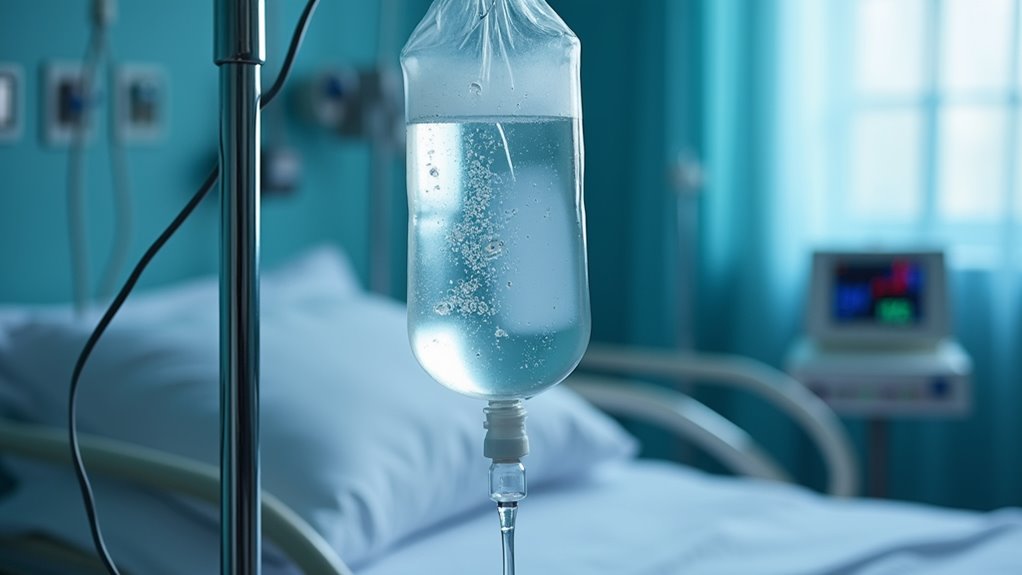
While medication protocols form the backbone of alcohol withdrawal treatment, essential supportive care and proper hydration serve as key pillars for successful recovery. You’ll need a quiet, dimly lit environment to minimize agitation and anxiety during withdrawal. Proper hydration through non-caffeinated fluids is vital, and your healthcare team will monitor your fluid and electrolyte balance closely.
Multidisciplinary collaboration guarantees comprehensive care, with nurses conducting regular assessments while social workers connect you to ongoing support services. Patient education strategies focus on helping you understand withdrawal symptoms, treatment expectations, and when to seek emergency care. You’ll receive vitamin supplementation, particularly thiamine, to prevent serious complications. Remember, your treatment environment should remain calm and reassuring, with minimal stimulation to support your recovery process.
Managing Withdrawal in Different Healthcare Settings
In managing alcohol withdrawal, you’ll find that inpatient settings offer the most extensive care through fixed-dose or symptom-triggered benzodiazepine protocols, continuous monitoring, and immediate access to emergency interventions. For outpatient treatment, you must carefully select patients with mild to moderate symptoms who have stable housing and reliable support systems, implementing structured medication protocols with clear monitoring guidelines. Your choice between these settings should depend on withdrawal severity, comorbidities, and the patient’s ability to comply with treatment protocols, with inpatient care remaining the safest option for moderate to severe cases. It’s important to note that managing withdrawal symptoms is just one component of initiating treatment for alcohol use disorder and should not be considered a complete therapeutic solution on its own.
Inpatient Treatment Best Practices
The management of alcohol withdrawal in inpatient settings requires a systematic, evidence-based approach that prioritizes patient safety and individualized care. In these settings, you’ll need to implement symptom-triggered benzodiazepine protocols using validated assessment tools like CIWA-Ar, while ensuring proper staff training and protocol development.
Your treatment strategy should combine pharmacological interventions with all-encompassing supportive care. You’ll want to use lorazepam for patients with liver problems or older adults, while diazepam works well for rapid CNS effects. It’s crucial to provide IV fluids, thiamine supplementation, and maintain a calm environment to minimize stimuli. Regular monitoring of critical signs and withdrawal symptoms will guide necessary adjustments to medication dosing. For complex cases, you may need to consider multimodal approaches that incorporate both fixed-dose and symptom-triggered protocols.
Outpatient Monitoring Strategies
Successful outpatient monitoring of alcohol withdrawal requires systematic assessment protocols and clear safety parameters. You’ll need daily evaluations using standardized tools like PAWSS and CIWA-Ar to track symptom severity and adjust medications accordingly. Regular monitoring of crucial signs, mental status, and hydration is indispensable.
To prevent social isolation management challenges, guarantee patients have reliable caregivers and a safe home environment. Family support engagement drastically improves outcomes through daily check-ins and medication compliance monitoring. You can utilize telemedicine or phone visits when face-to-face appointments aren’t achievable.
If you observe signs of oversedation, worsening symptoms, or psychiatric instability, immediately refer to higher-level care. Remember, outpatient management is only appropriate for mild to moderate withdrawal cases without complications or concurrent substance use disorders.
Prevention and Treatment of Common Complications
 Managing alcohol withdrawal complications requires an extensive approach focused on preventing and treating five pivotal areas: seizures, delirium tremens, Wernicke encephalopathy, autonomic instability, and long-term relapse.
You’ll need immediate benzodiazepine therapy and electrolyte monitoring for seizure prevention. For DT risk, you’ll require close essential sign monitoring and prompt intervention. Vitamin supplementation and malnutrition management through thiamine administration are indispensable before giving glucose-containing fluids.
| Complication | Primary Prevention | Key Treatment |
|---|---|---|
| Seizures | Benzodiazepines | CIWA-Ar monitoring |
| DT | Early intervention | ICU-level care |
| Wernicke | Thiamine therapy | High-dose vitamins |
For autonomic instability, you’ll need frequent essential sign checks and beta-blockers when necessary. To prevent relapse, you should start maintenance medications early and engage in behavioral interventions.
Evidence-Based Treatment Guidelines
Based on extensive clinical research, evidence-based guidelines for alcohol withdrawal treatment center on benzodiazepines as initial therapy, coupled with thorough risk assessment and personalized care planning.
You’ll need long-acting benzodiazepines like diazepam as your primary treatment, unless there’s liver impairment. Treatment duration typically spans 3-7 days, with dosing guided by withdrawal severity scales. Risk assessment considerations should evaluate your history of withdrawal complications, comorbid psychiatric conditions, and available support systems. If you’re high-risk or have significant medical concerns, you’ll require inpatient care.
Essential supportive measures include daily thiamine supplementation (200-300mg) and symptom management. For ideal outcomes, you’ll need continuous monitoring using structured scales like CIWA-Ar, with immediate care escalation if complications develop. Remember, antipsychotics shouldn’t be used alone for withdrawal management.
Long-Term Recovery and Relapse Prevention
The trek in the direction of sustained sobriety extends far beyond initial withdrawal management, requiring an extensive long-term strategy to prevent relapse and maintain recovery. For successful long term alcohol recovery, you’ll need integrated mental health care that addresses both substance use and any co-occurring disorders. Statistics show that while 70-90% of people experience at least one major relapse, your chances of sustained sobriety improve greatly with proper support and treatment.
| Recovery Component | Success Factor | Implementation |
|---|---|---|
| Medication | Naltrexone/Disulfiram | Daily as prescribed |
| Therapy | CBT/Family Support | Weekly sessions |
| Support Groups | AA/Community | 2-3 times weekly |
| Aftercare | Ongoing Care | Monthly check-ins |
Your recovery success depends heavily on treatment duration, aftercare participation, and addressing any underlying mental health conditions that could trigger relapse.
Alternative and Adjunct Therapies
While benzodiazepines remain the gold standard for alcohol withdrawal treatment, several alternative and adjunctive therapies can bolster recovery outcomes when properly integrated into your treatment plan. Nutritional supplementation, including thiamine, folic acid, and magnesium, helps prevent complications and supports your body’s recovery process. You’ll find that anticonvulsant medications like gabapentin and carbamazepine can effectively manage withdrawal symptoms, particularly if you have a history of seizures or can’t tolerate benzodiazepines.
For autonomic symptoms, medications like clonidine or beta-blockers might be added to your regimen. You’ll also benefit from non-pharmacological approaches such as cognitive-behavioral therapy and a supportive, low-stimulation environment. Regular monitoring and balanced fluid management are essential throughout your treatment, ensuring ideal therapeutic outcomes and minimizing withdrawal complications.
Frequently Asked Questions
How Long Does Alcohol Withdrawal Typically Last Without Medical Treatment?
Without medical treatment, your alcohol withdrawal timeline typically spans 7-10 days for physical symptoms, though psychological effects can persist much longer. You’ll likely experience initial withdrawal symptoms within 6-12 hours after your last drink, with peak symptoms occurring between 48-72 hours. Your withdrawal symptoms will be most intense during this peak period, potentially including dangerous complications like seizures or delirium tremens. Some psychological symptoms may continue for weeks or months.
Can I Safely Detox From Alcohol at Home While Taking Prescribed Medications?
No, you shouldn’t attempt alcohol detox at home, even with prescribed medications. While medications can help manage withdrawal symptoms, they require careful supervision and monitoring by healthcare professionals. Without proper medication management and supervised detox, you’re at risk for potentially life-threatening complications. If you’re considering detox, contact a healthcare provider who can assess your specific situation and recommend an appropriate treatment setting that guarantees your safety.
What Percentage of People Die From Untreated Severe Alcohol Withdrawal?
Untreated severe alcohol withdrawal, particularly delirium tremens (DTs), carries a mortality rate of up to 20%. You’re facing potentially life-threatening risks if you attempt to manage severe withdrawal without medical care. With proper medical supervision and treatment, these mortality rates drop vastly to 1-5%. Your risk increases enormously if you have a history of withdrawal seizures, DTs, or underlying health conditions. Don’t attempt severe alcohol withdrawal without professional medical supervision.
Does Health Insurance Typically Cover Inpatient Alcohol Withdrawal Treatment?
Yes, most U.S. health insurance plans cover inpatient care coverage for alcohol withdrawal treatment, though you’ll need to meet specific medical necessity criteria. You’ll typically need prior authorization and may face some out-of-pocket costs through deductibles or copayments. While outpatient treatment options are often covered initially, insurers generally approve inpatient care if you’re at risk for severe withdrawal symptoms, seizures, or delirium tremens requiring 24-hour medical supervision.
How Soon After Withdrawal Treatment Can Someone Safely Resume Working?
Your returning to work timeline depends on withdrawal severity and symptom resolution. For mild cases, you can typically resume work within 3-7 days after treatment when symptoms clear. However, moderate to severe cases require 5-14 days of monitoring. When considering resuming work, you’ll need full resolution of physical symptoms, cognitive recovery, and clearance from medication side effects. Safety-sensitive jobs may require longer recovery periods and formal medical clearance.