
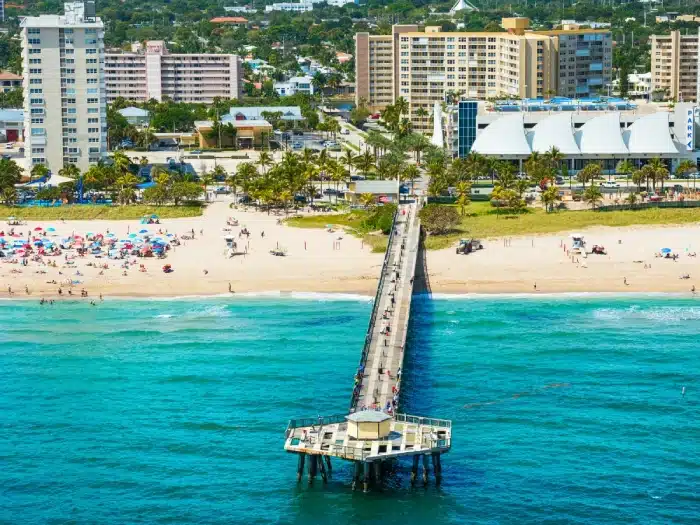
Our rehab program runs in Pompano Beach, in Broward County between Fort Lauderdale and Boca Raton. A live-in program away from home is often the point, so people come from across South Florida and from other states to step out of the routines tied to drinking, flying into Fort Lauderdale-Hollywood International when they travel.
Who we help
People come to our Pompano Beach rehab at very different points. Some are drinking daily and know they cannot stop on their own. Some have been through treatment before and relapsed, and need a program that addresses what went wrong the first time. Some are professionals who need their care handled with discretion. Many calls come from a husband, wife, parent, or adult child trying to get help for someone they love and not sure where to start. Wherever you are in that range, our admissions team will tell you plainly what level of care fits and what the next step is. If alcohol is controlling daily life, has caused withdrawal symptoms when you stop, or is damaging health, work, or family, rehab is the right call.
Our alcohol rehab programs
We provide every level of alcohol rehab in one place, so care matches the severity of the addiction and steps down as a person stabilizes. Because detox, residential, and outpatient care all run under one program in Pompano Beach, there is no handoff to an outside facility and no gap where people fall out of treatment.
Medical detox
Rehab begins with medically supervised detox, where alcohol clears the body while our medical team manages withdrawal and monitors vital signs around the clock. Detox usually runs 5 to 7 days, and clients move straight into residential care afterward. See our alcohol detox program.
Residential and inpatient alcohol rehab
Our residential program is the core of rehab, offered in 30, 60, and 90 day lengths. Clients live on site with 24/7 support and follow a structured daily schedule of therapy, medical care, and recovery work, away from the people and places tied to their drinking. The 30 day track suits people with a stable home to return to, while 60 and 90 day tracks give more time to rebuild for those with longer or more severe addiction or a history of relapse. See our residential alcohol treatment page.
Partial hospitalization (PHP)
PHP runs about 6 hours a day, 5 days a week, with evenings spent at home or in sober housing. It is a step down from residential care, for people who need intensive daily treatment but no longer need to live on site.
Intensive outpatient (IOP)
IOP runs about 3 hours a day, 3 to 5 days a week, built around work, school, or family. It suits people with a stable home and a support system, and it is a common step down after PHP.
Outpatient alcohol rehab
Standard outpatient is one to two sessions a week, for milder dependence or as ongoing support after a higher level of care. It keeps people connected to treatment as they return to normal routines across South Florida. For the full medical picture, see our alcohol treatment page.
What a day in rehab looks like
Residential days follow a set structure, which is part of what makes early recovery work. Mornings start with breakfast and a check-in group, followed by a main therapy group on a topic such as relapse prevention, coping skills, or the roots of addiction. Clients have individual therapy sessions through the week, along with specialized groups for trauma, dual diagnosis, or family issues. Afternoons mix process groups with education and wellness activity, and evenings include peer support such as 12-step or SMART Recovery meetings. Medical and psychiatric staff are available throughout, and there is downtime built in to rest and absorb the work.
How your treatment plan is personalized
A rehab plan is anchored to length of stay. The assessment sets the 30, 60, or 90 day track, the therapy load, and any medication, and the team reviews the track as you progress, extending it or stepping you down based on how you respond rather than a fixed calendar.
Therapies and medications we use
A rehab program carries a full daily therapy load, individual counseling plus several groups a day covering relapse prevention, coping skills, and the roots of the drinking, with family sessions across the stay. Naltrexone, acamprosate, or disulfiram are used when a clinician decides they fit, managed by the medical team on site. See our alcohol treatment overview for the full method set.
Dual diagnosis and co-occurring conditions
Many people entering rehab carry a mental health condition alongside the drinking, and a residential stay is where it can be worked on most intensively. Psychiatric care and medication management run daily during rehab, so co-occurring depression, anxiety, or trauma is treated in step with the addiction rather than deferred to aftercare.
Family program and aftercare
Alcohol addiction affects the whole family, so family therapy and education are part of treatment, helping the people closest to a client understand the condition and rebuild trust. Aftercare planning begins early, not at discharge. Every client leaves with a written relapse-prevention plan, referrals to outpatient or sober living where needed, and a place in our alumni community, so support continues after the program ends.
How admission works
Starting rehab begins with a call to set the length of stay and a date. Our admissions team runs the assessment, verifies your insurance, confirms the 30, 60, or 90 day track your plan supports, and books your admission. There is no cost to talk and the call is confidential.
Why choose AlcoholAwareness.org
We are a licensed Florida alcohol rehab that delivers evidence-based treatment with real medical oversight. The full continuum runs on site in Pompano Beach, so a person moves from detox to residential to outpatient without being handed off, which is where many people lose momentum. Detox is medically supervised with vital-sign monitoring, dual diagnosis care is built in, and every client gets an individualized plan rather than a fixed track. Our content is medically reviewed by Robert Gerchalk, who spent years in Florida mental health and substance abuse facilities and at The Johns Hopkins Hospital in Baltimore.
Insurance and admissions
Rehab is authorized by length of stay, so the number of days your plan approves matters as much as whether it covers rehab at all. Most major carriers, including Cigna, Aetna, and Blue Cross Blue Shield, cover residential rehab for a set number of days, then reauthorize based on progress. We verify for free, tell you the initial authorization your plan supports and how continued stay is reviewed, and handle the reauthorization paperwork so treatment is not interrupted. Call (855) 955-0771 to check your coverage and start date.
Alcohol rehab in Pompano Beach, Florida
Our rehab is in Pompano Beach, in Broward County between Fort Lauderdale and Boca Raton on Florida’s southeast coast. We treat residents of Pompano Beach and the surrounding South Florida cities, including Fort Lauderdale, Deerfield Beach, Lighthouse Point, Coconut Creek, Coral Springs, and Margate, and we welcome people who travel in from other states. South Florida has long drawn people for addiction treatment, and for good reason. Stepping away from the bars, the routines, and the people tied to drinking, and recovering somewhere settled and warm, makes early sobriety easier to hold onto. For anyone flying in, the area is served by Fort Lauderdale-Hollywood International Airport, and our admissions team helps coordinate the trip.
Start alcohol rehab today
Ready to step away and do the work? Call (855) 955-0771 to talk through a 30, 60, or 90 day rehab program with our Pompano Beach admissions team. The call is confidential and free, and we can verify your insurance and set a start date.
Alcohol rehab FAQ
How long is alcohol rehab?
Rehab is offered in 30, 60, and 90 day tracks, set by the severity of the addiction and how a person responds. Longer tracks suit more severe addiction or a history of relapse. The assessment gives you a clear estimate.
What is the difference between inpatient and outpatient rehab?
Inpatient, or residential, rehab is live-in with 24/7 support and a full daily schedule. Outpatient rehab lets you live at home and attend sessions around work and family. Many people start inpatient and step down to outpatient as they stabilize.
Does alcohol rehab include detox?
If you have a physical dependence, rehab starts with medically supervised detox, then moves into the rehab program once you are stable. Because both run at our Pompano Beach location, there is no handoff between them.
What happens after alcohol rehab?
Most people step down to a partial hospitalization program, intensive outpatient, or outpatient care, with a written relapse-prevention plan and a place in our alumni community, so support continues after the program ends.
How much does alcohol rehab cost?
Rehab is authorized by length of stay, so cost depends on the track your plan approves. Most major carriers, including Cigna, Aetna, and Blue Cross Blue Shield, cover residential rehab for a set number of days with reauthorization on progress, and we verify your benefits for free.