
Ethanol (C₂H₅OH) and methanol (CH₃OH) differ by one carbon atom, but this distinction determines everything from toxicity to industrial application. You can safely consume ethanol, while methanol converts to formic acid in your body, causing blindness or death. Methanol boils at 64.7°C versus ethanol’s 78.37°C, making it more volatile for solvent applications. Ethanol dominates fuel blending and beverages, while methanol serves as feedstock for formaldehyde production. Understanding their metabolic pathways and physical properties will help you select the right alcohol for your specific project. Ethanol (C₂H₅OH) and methanol (CH₃OH) differ by just one carbon atom, but that distinction determines everything from toxicity to practical use. You can safely consume ethanol, the alcohol found across types of alcoholic beverages, while methanol is highly toxic, converting to formic acid in the body and potentially causing blindness or death. Methanol boils at 64.7 °C compared with ethanol’s 78.37 °C, making it more volatile and useful for industrial solvent applications. Ethanol dominates fuel blending and beverage production, whereas methanol primarily serves as a chemical feedstock for formaldehyde. Understanding their metabolic pathways and physical properties helps clarify why only one alcohol is suitable for human consumption and why each has a distinct role in science and industry.
Methanol vs Ethanol: What’s the Actual Difference?
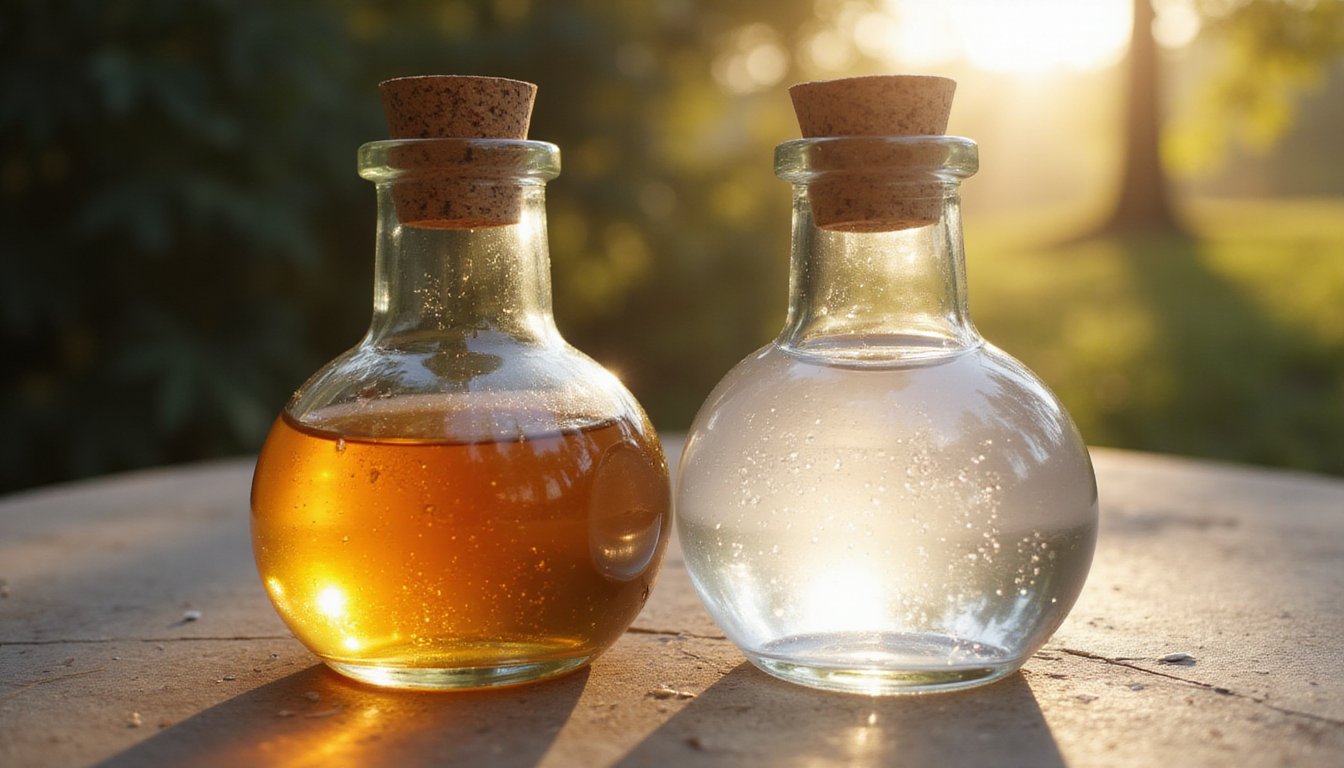
How can a single carbon atom make the difference between a safe drink and a deadly poison? When comparing methyl alcohol vs ethyl alcohol, you’ll find ethanol contains two carbon atoms (C₂H₅OH), while the methanol chemical structure has just one (CH₃OH). This ethyl vs methyl alcohol distinction determines everything about toxicity.
Ethanol is safe to drink because your body’s alcohol dehydrogenase processes it into manageable compounds. However, toxic alcohol methanol converts into formic acid, a methanol byproduct that causes methanol blindness risk and severe neurological damage. The difference between alcohols toxicity explains why industrial alcohol methanol poses extreme methanol poisoning risk. The danger is severe, as even 10 ml of methanol can cause permanent blindness and death. Methanol’s lower boiling point of 64.7°C compared to ethanol’s 78.37°C also makes it more volatile and quick to evaporate.
Understanding methanol vs drinking alcohol helps you recognize contaminated alcohol methanol dangers in counterfeit products and unsafe homemade alcohol.
Why Methanol Is Toxic but Ethanol Is Drinkable
Although methanol and ethanol share similar molecular structures, your body processes them through vastly different metabolic pathways that determine their toxicity. When you consume ethanol, alcohol dehydrogenase converts it to acetaldehyde, then acetate, which your body breaks down into carbon dioxide and water. This pathway produces temporary effects like intoxication and nausea but causes no lasting damage in moderate amounts.
Methanol follows a deadlier route. Your liver metabolizes it into formaldehyde and formic acid, a potent mitochondrial toxin that targets your retinas and basal ganglia. Your body eliminates ethanol 6.5 times faster than methanol, allowing toxic formate to accumulate. This buildup triggers severe metabolic acidosis. Just half a teaspoon of methanol can cause blindness or death. Curiously, your liver prioritizes ethanol metabolism, which is why ethanol serves as a methanol poisoning antidote. Research comparing pure methanol, pure ethanol, and ethanol/methanol mixtures has shown that lethality increases significantly when methanol concentration rises in denatured or adulterated alcohol products. If methanol is absorbed through the skin, it can also cause irritation, cracking, and dryness, making proper protective equipment essential when handling this chemical.
How to Tell Methanol and Ethanol Apart
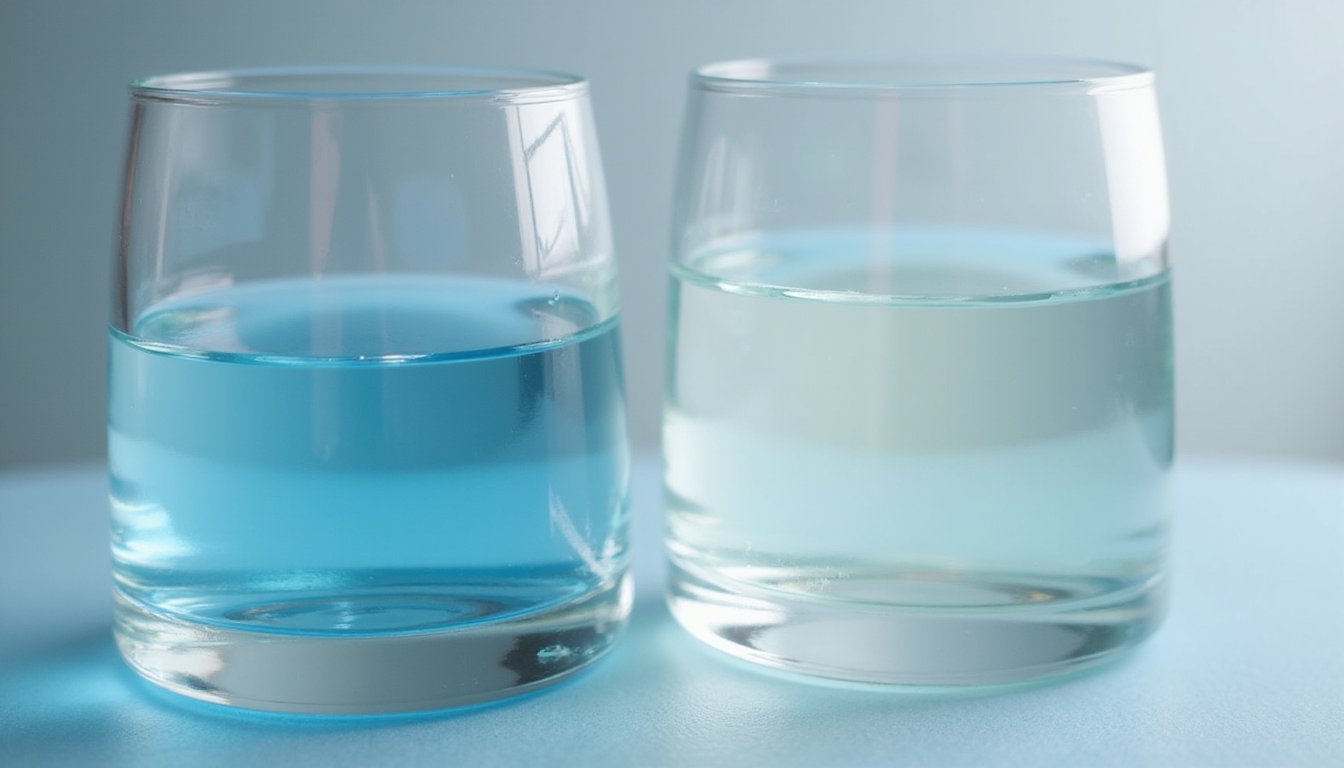
You can distinguish between ethanol and methanol using two reliable methods: the flame color test and boiling point comparison. When burned, ethanol produces a bright blue flame, while methanol burns with a light white or bright white flame. Additionally, methanol’s lower boiling point of 64.7°C separates it from ethanol’s boiling point of 78.37°C during distillation. A rotary evaporator can be used in laboratory settings to efficiently separate these alcohols by utilizing low pressure to promote evaporation at controlled temperatures. It’s critical to differentiate between these alcohols because methanol is highly poisonous and should never be consumed, whereas ethanol is safe for use in alcoholic beverages.
Flame Color Test
The flame color test remains one of the most widely circulated methods for distinguishing ethanol from methanol, yet it’s fundamentally unreliable for this purpose. Both alcohols produce nearly identical blue flames when pure, contradicting the popular myth that methanol burns red or yellow.
| Alcohol Type | Flame Color |
|---|---|
| Pure Ethanol | Blue |
| Pure Methanol | Blue/Invisible |
| Ethanol with Impurities | Yellow/Red |
| Methanol with Impurities | Yellow/Red |
You’ll find that yellow or red flames indicate aromatic impurities from distillation, not methanol contamination. The adage “if blue, it’s true; if red, you’re dead” doesn’t hold up under controlled testing. Laboratory experiments confirm 100% methanol and 92% ethanol yield similar blue flames, making visual distinction impossible without specialized equipment. In contrast, flame tests are reliably used to identify metal ions in compounds, where substances like copper chloride produce distinctive green flames and sodium chloride creates intense yellow flames. When conducting any flame demonstration, observers should be positioned at least 3 meters away and wear appropriate eye protection.
Boiling Point Differences
Because methanol and ethanol share similar flame characteristics, boiling point analysis offers a more measurable distinction between these alcohols. Methanol boils at 64.7°C (148.5°F), while ethanol boils at 78.37°C (173.1°F). This 13.67°C gap reflects methanol’s weaker intermolecular forces and higher volatility. Methanol’s highly volatile nature makes it useful as an industrial solvent and antifreeze, though it requires careful handling due to its toxicity.
You can’t selectively remove methanol through early distillation cuts when working with mixtures. Both alcohols form miscible solutions that evaporate together at blended temperatures. A 50% ABV ethanol-water mixture boils at approximately 180°F, not at either compound’s pure boiling point. This occurs because homogeneous miscible solutions have blended properties determined by relative concentrations rather than independent boiling points of each component.
For practical separation, you should discard tails rather than heads, as methanol concentrates later in the distillation process. Understanding these boiling dynamics helps you assess purity and recognize why simple heat-based separation methods won’t isolate methanol from ethanol-water solutions effectively.
Boiling Point, Density, and Solubility Compared
Although ethanol and methanol share similar chemical structures, their physical properties differ in measurable ways that affect industrial and safety applications.
Methanol boils at 64.7°C (148.5°F), while ethanol requires 78.37°C (173.07°F) to vaporize. You’ll find this difference stems from ethanol’s stronger hydrogen bonding, which demands more heat energy for vaporization. In mixtures, these alcohols don’t boil separately, they contribute to a shared solution boiling point.
When you compare densities, methanol measures 792 kg/m³ versus ethanol’s 789 kg/m³. This slight variation reflects their different molar masses: 32.04 g/mol for methanol and 46.07 g/mol for ethanol. As alcohols increase in molecular size, van der Waals dispersion forces also contribute to their physical properties alongside hydrogen bonding.
Both alcohols are fully miscible with water due to their hydroxyl groups. However, methanol’s smaller hydrocarbon chain makes it more soluble, forming homogeneous mixtures more readily than ethanol.
How Ethanol and Methanol Are Produced
Moving beyond physical properties, understanding how manufacturers produce these two alcohols reveals why they serve such different purposes.
You’ll find ethanol production relies primarily on fermentation. In dry milling, processors grind whole corn into meal, add water to form mash, then use enzymes to convert starch into dextrose. After cooking and cooling to 80-90°C, yeast transforms sugars into ethanol at 90-95% yield. Over 90% of grain ethanol comes from dry milling operations. Cassava-based ethanol production follows a similar process, where Saccharomyces cerevisiae converts starch and sugar into ethanol and CO2 during fermentation. The wet milling process takes a different approach, first separating the grain into basic components through soaking before fermentation begins.
Methanol production follows a completely different path. Manufacturers synthesize it through syngas carbonylation, combining carbon monoxide and hydrogen. The process requires preheating to 300°C in catalytic reactors using phosphoric acid, achieving 4-25% conversion rates. This industrial synthesis explains why methanol contains no biological components and remains unsuitable for human consumption.
Methanol vs Ethanol as Fuel: Efficiency and Performance
When comparing ethanol and methanol as fuel alternatives, you’ll find distinct differences in energy content, with methanol containing just 50% of a gasoline gallon equivalent while ethanol delivers higher calorific value and lower brake specific fuel consumption. You should consider combustion characteristics carefully, as ethanol demonstrates faster combustion rates and higher heat release under high engine loads, though methanol exhibits superior laminar flame speed under fuel-rich conditions. Research indicates that methanol has a better effect on improving gasoline ignition performance than ethanol when blended at the same oxygen mass fraction. Both fuels can be domestically produced, contributing to energy security by reducing dependence on imported oil. From a sustainability perspective, you’ll need to evaluate production methods alongside performance metrics to determine which alcohol fuel best suits your specific application requirements.
Energy Efficiency Comparison
Energy efficiency breaks down into measurable metrics when comparing methanol and ethanol as fuel alternatives. You’ll find ethanol delivers superior energy density, containing roughly twice the energy per gallon compared to methanol’s 50% gasoline gallon equivalent.
| Metric | Ethanol vs Methanol |
|---|---|
| Energy Density | Ethanol higher |
| BSFC | Methanol 10.3% higher |
| BTE | Ethanol 6.12% higher |
| BSEC | Methanol 1.37% lower |
| Calorific Value | Ethanol superior |
When you’re evaluating brake thermal efficiency, ethanol blends outperform methanol by 6.12% in SI engines. Ethanol’s higher calorific value translates directly to lower brake specific fuel consumption. However, methanol demonstrates 1.37% smaller brake specific energy consumption due to its lower calorific value. You’ll achieve ideal efficiency with ethanol-gasoline blends that maintain BTE comparable to pure gasoline while reducing overall fuel consumption.
Combustion and Flame Characteristics
Although both alcohols enhance gasoline’s burning properties, methanol and ethanol exhibit distinct flame behaviors that directly impact engine performance. Methanol’s laminar flame speed exceeds ethanol’s in rich fuel states, enabling faster combustion cycles. However, ethanol demonstrates slightly higher flame speeds under lean conditions.
When you examine combustion stability, you’ll find significant differences:
- Ethanol’s disturbance value reaches 0.5592 compared to methanol’s 0.2351, indicating greater gasoline interaction
- Methanol maintains COV imep below 2% even at high EGR rates
- Methanol’s wider flammability limits reduce cycle-to-cycle variations
Methanol-gasoline blends produce higher combustion temperatures than ethanol-gasoline under equivalent conditions. You’ll also notice methanol increases extinction strain rates, improving flame stability. These characteristics translate to methanol’s faster flame development and propagation, shortening overall combustion duration in your engine.
Sustainability and Production Methods
Beyond flame dynamics and combustion behavior, the sustainability profiles of methanol and ethanol depend heavily on their production pathways and feedstock sources.
You’ll find that over 90% of global ethanol comes from crop fermentation, making it resource-intensive regarding land and water use. Methanol offers greater feedstock flexibility, you can synthesize it from scrap wood, coal, natural gas, high-ash coal, or agricultural residue through catalytic reactions of carbon dioxide, carbon monoxide, and hydrogen.
Converting methanol to ethanol presents a viable pathway when agricultural feedstocks are scarce but natural gas remains accessible. This process uses catalytic hydrogenation with hydrogen gas over copper-based catalysts under high pressure and temperature. You can then use the produced ethanol as renewable fuel, solvent, or chemical feedstock, potentially at lower costs than traditional fermentation methods.
Industrial Uses for Methanol and Ethanol
Both methanol and ethanol pull their weight across diverse industrial sectors, serving as critical feedstocks, fuels, and processing agents.
Methanol drives chemical manufacturing as the primary feedstock for formaldehyde production, which you’ll find in plastics, plywood, and resins. It’s also essential for synthesizing acetic acid and MTBE, a gasoline octane booster.
Ethanol dominates fuel blending applications:
- E10 blends (10% ethanol) reduce emissions in standard gasoline worldwide
- E85 formulations (85% ethanol) power flex-fuel vehicles
- ETBE production creates higher-octane clean fuels
You’ll encounter methanol in antifreeze formulations and windshield washer fluids due to its low freezing point. It prevents hydrate formation in natural gas pipelines during cold weather operations.
Ethanol serves beverage production through yeast fermentation while also enabling industrial alcohol manufacturing for flavorings and extracts. does beer have ethanol is a common question, especially among those curious about the ingredients in their favorite brews. The presence of ethanol in beer not only contributes to its intoxicating effects but also plays a role in the overall flavor profile of the beverage. Understanding its significance can enhance one’s appreciation for different types of beers and their brewing processes.
Methanol vs Ethanol in Solvents and Cleaning
When you’re selecting between methanol and ethanol as solvents, you’ll need to evaluate their distinct polarity indices, methanol measures 0.762 compared to ethanol’s 0.654, making methanol more effective for dissolving polar compounds. In industrial cleaning applications, you’ll find methanol works as a powerful solvent and antifreeze component, while ethanol serves primarily in disinfection and pharmaceutical-grade cleaning where antimicrobial properties matter. Before handling either substance, you must implement appropriate safety protocols, as methanol requires protective equipment due to its toxicity, whereas ethanol presents lower handling hazards despite its flammability.
Solvent Polarity Differences
Methanol and ethanol differ markedly in their polarity metrics, which directly affects their performance as solvents and cleaning agents. When you’re selecting between these alcohols, you’ll find methanol consistently ranks higher across standard polarity measurements.
Key polarity metrics that distinguish these solvents:
- Polarity index: Methanol measures 5.1 on Snyder’s scale, while ethanol positions below it in solvent rankings.
- Dielectric constant: Methanol reaches 32.70 compared to ethanol’s 24.55, indicating stronger ion dissociation capability.
- Dipole moment: Methanol measures 2.87 D versus ethanol’s 1.66 D due to its smaller molecular size.
These differences translate directly to cleaning applications. You’ll achieve better extraction of strongly polar compounds with methanol, while ethanol works effectively in 5-30% hexane mixtures for moderately polar solutes.
Industrial Cleaning Applications
Industrial cleaning operations rely heavily on these polarity differences to achieve specific outcomes. You’ll find methanol excels in applications requiring rapid evaporation, its 64.7°C boiling point and high vapor pressure make it ideal for paint removers, photocopier developers, and heavy degreasing tasks.
| Property | Methanol | Ethanol |
|---|---|---|
| Boiling Point | 64.7°C | 78.37°C |
| Density | 0.7918 g/cm³ | 0.789 g/cm³ |
Ethanol’s higher boiling point of 78.37°C means surfaces stay damp longer, which you’ll want for varnishes, perfumes, and pharmaceutical cleaning. Its slower evaporation rate supports prolonged surface contact during antibacterial treatments. Ethanol’s higher boiling point of 78.37 °C means surfaces stay damp longer, which is desirable for varnishes, perfumes, and pharmaceutical cleaning applications. This slower evaporation rate, often highlighted when comparing isopropyl alcohol vs drinking alcohol, supports prolonged surface contact during antibacterial treatments, making ethanol preferable in settings where extended wet time improves effectiveness.
When selecting between these solvents, consider your process requirements: methanol for quick-drying industrial applications where toxicity concerns are manageable, ethanol for cosmetic and lab environments requiring safer handling protocols.
Safety Handling Considerations
How do you protect yourself when handling these two solvents with vastly different toxicity profiles? Methanol demands rigorous safety protocols due to its severe toxicity, just 10mL causes blindness, while 30mL proves fatal through ingestion or skin absorption. You must wear appropriate PPE to minimize dermal exposure risks.
Follow these critical handling protocols:
- Store both solvents in sealed, non-reactive containers away from ignition sources, sunlight, and children.
- Label containers clearly in lab and industrial settings to prevent dangerous methanol-ethanol confusion.
- Wash methanol-contacted skin immediately with tepid water and seek medical evaluation.
Methanol’s higher vapor pressure means it evaporates quickly, releasing hazardous fumes. You shouldn’t use methanol in disinfectants for this reason. Ethanol requires standard chemical handling procedures with less restrictive protocols.
Cost and Availability: Methanol vs Ethanol
When comparing these two alcohols in the marketplace, you’ll find significant price differences driven by production methods, regulatory frameworks, and end-use applications.
Ethanol currently trades at $1.664/gallon FOB Gulf, reflecting a 1.8% week-over-week decline and 17.4% year-over-year decrease. Midwest wholesale rack prices sit at 46.77 cents/liter, down 1.2%. U.S. imports reached 775,791 tons of unadulterated ethanol from January through November 2025.
Methanol pricing operates under different structures. Bio-methanol caps at 1,193 euro/ton under FuelEU Maritime regulations, while e-methanol commands 2,238 euro/ton through 2033. EU ETS compliance adds 321 euro/ton in 2026 for maritime applications. Import supply remains the primary factor influencing 2025 methanol market dynamics. The RFNBO reward factor‘s 2034 expiration will reduce e-methanol’s maximum price to 1,325 euro/ton.
Choosing Between Methanol and Ethanol for Your Project
Selecting the right alcohol for your project depends on three critical factors: human contact potential, regulatory requirements, and performance specifications.
You’ll want to evaluate these key decision criteria:
- Safety profile: Ethanol’s metabolism produces acetaldehyde then acetic acid, making it suitable for consumables and topical applications. Methanol converts to formaldehyde, causing blindness and organ damage.
- Application type: Choose ethanol for beverages, perfumery, and solvents requiring human contact. Reserve methanol for antifreeze, industrial solvents, and formaldehyde synthesis.
- Performance metrics: Ethanol delivers higher energy efficiency and sustainability advantages. Methanol offers cost benefits in non-consumable industrial processes.
If your project involves any human contact, ingestion, inhalation, or skin exposure, you must select ethanol. Methanol’s toxicity restricts it exclusively to controlled industrial applications.
Frequently Asked Questions
Can Methanol Poisoning Be Reversed if Treated Early Enough?
Yes, you can reverse methanol poisoning if you receive treatment before toxic metabolites form. When you’re treated early with fomepizole, it inhibits alcohol dehydrogenase, giving doctors a 12-hour window to prepare hemodialysis. Studies show combination therapy using methylprednisolone, erythropoietin, and folinic acid has reversed complete bilateral blindness. You’ll achieve better outcomes, 88.2% improved visual recovery rates, with intravenous steroids. However, delays risk permanent retinal damage or 18-21% mortality rates.
Why Do Some Countries Still Allow Methanol in Consumer Products?
You’ll find methanol persists in consumer products due to regulatory gaps and economic pressures. It’s markedly cheaper than ethanol for manufacturing solvents, antifreeze, and windscreen washer fluid. Many nations lack strict tracking requirements or extensive bans outside regulated channels. Weak enforcement enables diversion into illicit alcohol production. Despite documented poisoning incidents across 28+ at-risk countries and thousands of deaths globally, cost-driven manufacturing priorities and inconsistent international standards continue permitting methanol in non-beverage goods.
Does Cooking With Ethanol-Based Extracts Pose Any Health Risks?
Cooking with ethanol-based extracts generally poses minimal health risks when you use them in typical recipe amounts. Heat causes the alcohol to evaporate during baking, substantially reducing your exposure. However, you’ll need to exercise caution with children, 10 mL of 35% vanilla extract can raise a 6 kg child’s blood alcohol above 80 mg/dL, risking CNS depression. You shouldn’t consume uncooked extracts directly, and you should store them safely away from vulnerable populations.
Can Animals Safely Metabolize Methanol Better Than Humans Can?
Yes, many animals metabolize methanol far more efficiently than you can. Rodents like rats and mice possess vastly higher hepatic tetrahydrofolate levels (25.3-60.9 nmol/g versus your 15.8 nmol/g), enabling rapid formate oxidation to CO2. This prevents the toxic formate accumulation that causes your metabolic acidosis and ocular damage. Rats clear formate at twice the rate monkeys do, while you’re left vulnerable to delayed, severe poisoning from the same exposure.
How Long Does Methanol Stay Detectable in the Human Body?
Methanol stays detectable in your body for varying durations depending on the sample type. In blood, you’ll see an elimination half-life of 17-27 hours without treatment. Your saliva clears methanol faster with a half-time of 1.3 hours, while urine shows 1.7 hours. Exhaled breath eliminates it quickest at 0.8 hours post-exposure. Clinicians typically monitor your blood every 2-4 hours and observe you for 16-24 hours post-ingestion.